
Home
Palestinian civilians in Rafah ‘awaiting execution’
- Details
- Written by Super User
- Category: MENA
- Hits: 515
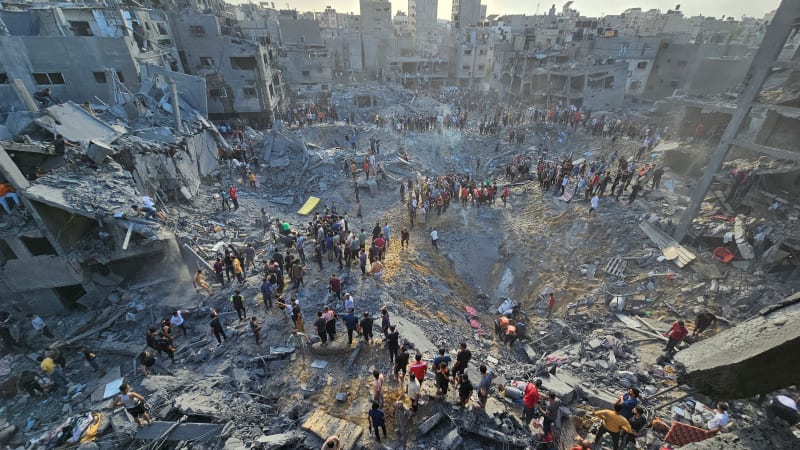
RAFAH, GAZA OCCUPIED - Palestinian civilians fleeing Israel’s assault on east Rafah have said they have been “sentenced to death” and are “awaiting execution”, as international pressure mounts on Israel to agree to a Gaza ceasefire.
On Monday Israel ordered a partial evacuation of Rafah, before tanks and troops moved in, seizing control of the Palestinian side of the Rafah crossing with Egypt. The military has pushed into eastern areas of the border city, which is sheltering 1.4 million people, the majority of whom are families displaced from other parts of the strip.
United Nations officials told The Independent that Israel’s military operation has severed the critical “arteries” of humanitarian aid to the besieged area, and that a further assault could lead to a “bloodbath” as civilians have nowhere safe to evacuate to.
The decision to go into Rafah came just hours after Israel rejected a ceasefire deal that Hamas agreed to, piling pressure on ongoing talks in Cairo.
Israeli prime minister Benjamin Netanyahu, who has hailed the Rafah offensive as “a very significant step” towards destroying Hamas, is facing mounting domestic and international calls to agree to a halt to the fighting.
Protests have spread across the world. Qatar has asked for international intervention to prevent the rest of Rafah being invaded. And even the US, Israel’s closest ally and main weapons supplier, is withholding a delivery of bombs over the lack of civilian safeguards.
Washington has reportedly carefully reviewed the delivery of weapons that might be used in Rafah, and as a result paused a shipment consisting of 1,800 bombs weighing 2,000 pounds each and 1,700 bombs weighing 500 pounds each.
“We’ve been very clear... from the very beginning that Israel shouldn’t launch a major attack into Rafah without accounting for and protecting the civilians that are in that battlespace,” the US defence secretary, Lloyd Austin, told a Senate hearing on Wednesday.
“And again, as we have assessed the situation, we have paused one shipment of high payload munitions.”
In Rafah, where battles raged, families said that some prices had doubled due to the closure of the Rafah crossing. Israel said it has reopened another crossing, Kerem Shalom, but the UN said there had been no aid deliveries through it.
Sahar, who is five times displaced across Gaza, said her family were heading for so-called humanitarian zones identified by the Israeli military but even they were not safe she said, warning of hunger as some food and supply items like sugar, chickpeas and cooking gas had started disappearing from shelves.
“Prices have increased, especially for baby milk and gas cooking, diapers, and olive oil too. There are people who cannot afford this,” she said.
“The negotiations were on the verge of success, and they told us that there was great progress. But suddenly, it failed and we appear to have gone right back to zero. We have no hope,” she added.
Iyad, who also fled east Rafah, told The Independent panicked families had little hope Israel would agree to a ceasefire deal, before widening their offensive.
“People fled carrying their tent, clothes and mattress and ran through the streets. I see we are sentenced to death and awaiting execution,” he said in desperation.
“I think the deal will be signed after they have finished the invasion of Rafah. Today a girl begged for my help getting a tent for her blind father. I am afraid that I will die and that no one will bury me.”
Israel has launched a punishing assault on Gaza and imposed a siege in retaliation for the 7 October attacks by Hamas on southern Israel, during which around 1,100 people were killed and another 250, including children, taken hostage.
Since then, Palestinian health officials say Israel’s assault has killed nearly 35,000 people, the majority women and children. The UN has warned of a looming famine and said that more than half the 2.3 million strong population of Gaza is experiencing catastrophic levels of hunger.
Despite global calls for a ceasefire, Israel this week rejected an Egyptian and Qatari negotiated three-phase deal which Hamas accepted, saying it fell short of their demands.
The proposal reportedly includes a first phase with a six-week ceasefire, an influx of aid to Gaza, the return of 33 Israeli hostages, alive or dead, and the release by Israel of 30 detained Palestinian children and women for each released Israeli hostage.
According to Al Jazeera, the ceasefire text that Hamas agreed to would then include the release of older, sick and wounded civilian hostages in exchange for elderly and sick Palestinian prisoners. Then each female Israeli soldier hostage would be released in exchange for 50 Palestinian prisoners, including those serving life sentences.
Israel said it was too watered down and talks continue in Cairo, where delegations from Hamas, Israel, the US, Egypt and Qatar are meeting.
Mr Netanyahu is facing increasing anger in Israel, where opinion is divided over the military offensive. Families of the hostages have held protests in Tel Aviv, demanding the government sign a deal to bring their loved ones home, and prioritise that over any military gains. Several family members told The Independent they were terrified that their loved ones would be killed in the crossfire.
CIA chief William Burns, who has been shuttling around the region for talks on the ceasefire deal, reportedly met Mr Netanahu on Wednesday for closed-door negotiations.
Qatar’s Ministry of Foreign Affairs, meanwhile, said that it strongly condemns Israel’s Rafah incursion and called for international intervention to prevent the city from being invaded.
Gershon Baskin, a political activist and veteran negotiator who helped broker the release of Israeli soldier Gilad Shalit from Gaza in 2011, said an ongoing military offensive will not bring home the hostages safe and alive.
“The military offensive will only kill more hostages,” he told The Independent bluntly, adding he was concerned there was no way to bridge the gaps between Hamas and Israel’s versions of a truce deal. Hamas wants an end to the war and Mr Netanyahu’s government does not, he said.
“There’s a dead end here and I don’t know how you get it around it,” he added.
He said he believed the Israeli government’s plan was to finish the military offensive before any truce and that Mr Netanyahu, whose popularity has plummeted, wants to prolong the war to stave off potential elections and “to keep himself in power”.
Israel has denied restrictions on aid or allegations civilians were dying in the Rafah offensive. Israeli government spokesperson Avi Hyman said on Wednesday that Israel opened the Kerem Shalom land crossing to Gaza and claimed there was “surplus of aid” in Gaza but that Hamas was restricting it.
But the UN Palestinian refugee agency, UNRWA, said no aid was getting into Gaza, despite desperate need. “We’re not receiving any aid into the #GazaStrip,” Scott Anderson, deputy director at UNRWA in Gaza, posted on X.
Ali, 46, who had fled to an area just past Israel's designated evacuation zone, said people in the south were starting to go hungry.
“There are not enough places for tents and prices – which were already expensive – have increased,” he said, describing the situation in east Rafah as “frightening”.
Hasan, 53, said he feared some would not be able to evacuate if the assault widened “because they do not have enough money for transportation or tents”.
“We are preparing ourselves for the worst.”
Palestinian prisoners strapped down, blindfolded, held in diapers: whistleblowers
- Details
- Written by Super User
- Category: MENA
- Hits: 571
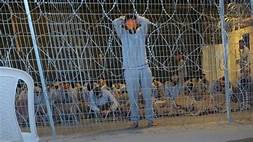
Sde Teiman, Israel - At a military base that now doubles as a detention center in Israel’s Negev desert, an Israeli working at the facility snapped two photographs of a scene that he says continues to haunt him, according to CNN.
Rows of men in gray tracksuits are seen sitting on paper-thin mattresses, ringfenced by barbed wire. All appear blindfolded, their heads hanging heavy under the glare of floodlights.
A putrid stench filled the air and the room hummed with the men’s murmurs, the Israeli who was at the facility told CNN. Forbidden from speaking to each other, the detainees mumbled to themselves.
“We were told they were not allowed to move. They should sit upright. They’re not allowed to talk. Not allowed to peek under their blindfold.”
Guards were instructed “to scream uskot” – shut up in Arabic – and told to “pick people out that were problematic and punish them,” the source added.
CNN spoke to three Israeli whistleblowers who worked at the Sde Teiman desert camp, which holds Palestinians detained during Israel’s invasion of Gaza. All spoke out at risk of legal repercussions and reprisals from groups supportive of Israel’s hardline policies in Gaza.
They paint a picture of a facility where doctors sometimes amputated prisoners’ limbs due to injuries sustained from constant handcuffing; of medical procedures sometimes performed by underqualified medics earning it a reputation for being “a paradise for interns”; and where the air is filled with the smell of neglected wounds left to rot.
According to the accounts, the facility some 18 miles from the Gaza frontier is split into two parts: enclosures where around 70 Palestinian detainees from Gaza are placed under extreme physical restraint, and a field hospital where wounded detainees are strapped to their beds, wearing diapers and fed through straws.
“They stripped them down of anything that resembles human beings,” said one whistleblower, who worked as a medic at the facility’s field hospital.
“(The beatings) were not done to gather intelligence. They were done out of revenge,” said another whistleblower. “It was punishment for what they (the Palestinians) did on October 7 and punishment for behavior in the camp.”
Responding to CNN’s request for comment on all the allegations made in this report, the Israeli military, known as the Israel Defense Forces (IDF), said in a statement: “The IDF ensures proper conduct towards the detainees in custody. Any allegation of misconduct by IDF soldiers is examined and dealt with accordingly. In appropriate cases, MPCID (Military Police Criminal Investigation’s Division) investigations are opened when there is suspicion of misconduct justifying such action.”
“Detainees are handcuffed based on their risk level and health status. Incidents of unlawful handcuffing are not known to the authorities.”
The IDF did not directly deny accounts of people being stripped of their clothing or held in diapers. Instead, the Israeli military said that the detainees are given back their clothing once the IDF has determined that they pose no security risk.
Reports of abuse at Sde Teiman have already surfaced in Israeli and Arab media after an outcry from Israeli and Palestinian rights groups over conditions there. But this rare testimony from Israelis working at the facility sheds further light on Israel’s conduct as it wages war in Gaza, with fresh allegations of mistreatment. It also casts more doubt on the Israeli government’s repeated assertions that it acts in accordance with accepted international practices and law.
CNN has requested permission from the Israeli military to access the Sde Teiman base. Last month, a CNN team covered a small protest outside its main gate staged by Israeli activists demanding the closure of the facility. Israeli security forces questioned the team for around 30 minutes there, demanding to see the footage taken by CNN’s photojournalist. Israel often subjects reporters, even foreign journalists, to military censorship on security issues.
Detained in the desert
The Israeli military has acknowledged partially converting three different military facilities into detention camps for Palestinian detainees from Gaza since the Hamas-led October 7 attack on Israel, in which Israeli authorities say about 1,200 were killed and over 250 were abducted, and the subsequent Israeli offensive in Gaza, killing nearly 35,000 people according to the strip’s health ministry. These facilities are Sde Teiman in the Negev desert, as well as Anatot and Ofer military bases in the occupied West Bank.
The camps are part of the infrastructure of Israel’s Unlawful Combatants Law, an amended legislation passed by the Knesset last December that expanded the military’s authority to detain suspected militants.
The law permits the military to detain people for 45 days without an arrest warrant, after which they must be transferred to Israel’s formal prison system (IPS), where over 9,000 Palestinians are being held in conditions that rights groups say have drastically deteriorated since October 7. Two Palestinian prisoners associations said last week that 18 Palestinians – including leading Gaza surgeon Dr. Adnan al-Bursh – had died in Israeli custody over the course of the war.
The military detention camps – where the number of inmates is unknown – serve as a filtration point during the arrest period mandated by the Unlawful Combatants Law. After their detention in the camps, those with suspected Hamas links are transferred to the IPS, while those whose militant ties have been ruled out are released back to Gaza.
CNN interviewed over a dozen former Gazan detainees who appeared to have been released from those camps. They said they could not determine where they were held because they were blindfolded through most of their detention and cut off from the outside world. But the details of their accounts tally with those of the whistleblowers.
“We looked forward to the night so we could sleep. Then we looked forward to the morning in hopes that our situation might change,” said Dr. Mohammed al-Ran, recalling his detainment at a military facility where he said he endured desert temperatures, swinging from the heat of the day to the chill of night. CNN interviewed him outside Gaza last month.
Al-Ran, a Palestinian who holds Bosnian citizenship, headed the surgical unit at northern Gaza’s Indonesian hospital, one of the first to be shut down and raided as Israel carried out its aerial, ground and naval offensive.
He was arrested on December 18, he said, outside Gaza City’s Al-Ahli Baptist Hospital, where he had been working for three days after fleeing his hospital in the heavily bombarded north.
He was stripped down to his underwear, blindfolded and his wrists tied, then dumped in the back of a truck where, he said, the near-naked detainees were piled on top of one another as they were shuttled to a detention camp in the middle of the desert.
The details in his account are consistent with those of dozens of others collected by CNN recounting the conditions of arrest in Gaza. His account is also supported by numerous images depicting mass arrests published on social media profiles belonging to Israeli soldiers. Many of those images show captive Gazans, their wrists or ankles tied by cables, in their underwear and blindfolded.
Al-Ran was held in a military detention center for 44 days, he told CNN. “Our days were filled with prayer, tears, and supplication. This eased our agony,” said al-Ran.
“We cried and cried and cried. We cried for ourselves, cried for our nation, cried for our community, cried for our loved ones. We cried about everything that crossed our minds.”
A week into his imprisonment, the detention camp’s authorities ordered him to act as an intermediary between the guards and the prisoners, a role known as Shawish, “supervisor,” in vernacular Arabic.
According to the Israeli whistleblowers, a Shawish is normally a prisoner who has been cleared of suspected links to Hamas after interrogation.
The Israeli military denied holding detainees unnecessarily, or using them for translation purposes. “If there is no reason for continued detention, the detainees are released back to Gaza,” they said in a statement.
However, whistleblower and detainee accounts – particularly pertaining to Shawish – cast doubt on the IDF’s depiction of its clearing process. Al-Ran says that he served as Shawish for several weeks after he was cleared of Hamas links. Whistleblowers also said that the absolved Shawish served as intermediaries for some time.
They are typically proficient in Hebrew, according to the eyewitnesses, enabling them to communicate the guards’ orders to the rest of the prisoners in Arabic.
For that, al-Ran said he was given a special privilege: his blindfold was removed. He said this was another kind of hell.
“Part of my torture was being able to see how people were being tortured,” he said. “At first you couldn’t see. You couldn’t see the torture, the vengeance, the oppression.
“When they removed my blindfold, I could see the extent of the humiliation and abasement … I could see the extent to which they saw us not as human beings but as animals.”
Al-Ran’s account of the forms of punishment he saw were corroborated by the whistleblowers who spoke with CNN. A prisoner who committed an offense such as speaking to another would be ordered to raise his arms above his head for up to an hour. The prisoner’s hands would sometimes be zip-tied to a fence to ensure that he did not come out of the stress position.
For those who repeatedly breached the prohibition on speaking and moving, the punishment became more severe. Israeli guards would sometimes take a prisoner to an area outside the enclosure and beat him aggressively, according to two whistleblowers and al-Ran. A whistleblower who worked as a guard said he saw a man emerge from a beating with his teeth, and some bones, apparently broken.
That whistleblower and al-Ran also described a routine search when the guards would unleash large dogs on sleeping detainees, lobbing a sound grenade at the enclosure as troops barged in. Al-Ran called this “the nightly torture.”
“While we were cabled, they unleashed the dogs that would move between us, and trample over us,” said al-Ran. “You’d be lying on your belly, your face pressed against the ground. You can’t move, and they’re moving above you.”
The same whistleblower recounted the search in the same harrowing detail. “It was a special unit of the military police that did the so-called search,” said the source. “But really it was an excuse to hit them. It was a terrifying situation.”
“There was a lot of screaming and dogs barking.”
Strapped to beds in a field hospital
Whistleblower accounts portrayed a different kind of horror at the Sde Teiman field hospital.
“What I felt when I was dealing with those patients is an idea of total vulnerability,” said one medic who worked at Sde Teiman.
“If you imagine yourself being unable to move, being unable to see what’s going on, and being completely naked, that leaves you completely exposed,” the source said. “I think that’s something that borders on, if not crosses to, psychological torture.”
Another whistleblower said he was ordered to perform medical procedures on the Palestinian detainees for which he was not qualified.
“I was asked to learn how to do things on the patients, performing minor medical procedures that are totally outside my expertise,” he said, adding that this was frequently done without anesthesia.
“If they complained about pain, they would be given paracetamol,” he said, using another name for acetaminophen.
“Just being there felt like being complicit in abuse.”
The same whistleblower also said he witnessed an amputation performed on a man who had sustained injuries caused by the constant zip-tying of his wrists. The account tallied with details of a letter authored by a doctor working at Sde Teiman published by Ha’aretz in April.
“From the first days of the medical facility’s operation until today, I have faced serious ethical dilemmas,” said the letter addressed to Israel’s attorney general, and its health and defense ministries, according to Ha’aretz. “More than that, I am writing (this letter) to warn you that the facilities’ operations do not comply with a single section among those dealing with health in the Incarceration of Unlawful Combatants Law.”
An IDF spokesperson denied the allegations reported by Ha’aretz in a written statement to CNN at the time, saying that medical procedures were conducted with “extreme care” and in accordance with Israeli and international law.
The spokesperson added that the handcuffing of the detainees was done in “accordance with procedures, their health condition and the level of danger posed by them,” and that any allegation of violence would be examined.
Whistleblowers also said that medical team were told to refrain from signing medical documents, corroborating previous reporting by rights group Physicians for Human Rights in Israel (PHRI).
The PHRI report released in April warned of “a serious concern that anonymity is employed to prevent the possibility of investigations or complaints regarding breaches of medical ethics and professionalism.”
“You don’t sign anything, and there is no verification of authority,” said the same whistleblower who said he lacked the appropriate training for the treatment he was asked to administer. “It is a paradise for interns because it’s like you do whatever you want.”
CNN also requested comment from the Israeli health ministry on the allegations in this report. The ministry referred CNN back to the IDF.
Concealed from the outside world
Sde Teiman and other military detention camps have been shrouded in secrecy since their inception. Israel has repeatedly refused requests to disclose the number of detainees held at the facilities, or to reveal the whereabouts of Gazan prisoners.
Last Wednesday, the Israeli Supreme Court held a hearing in response to a petition brought forward by Israeli rights group, HaMoked, to reveal the location of a Palestinian X-Ray technician detained from Nasser Hospital in southern Gaza in February. It was the first court session of its kind since October 7.
Israel’s highest court had previously rejected writs of habeas corpus filed on behalf of dozens of Palestinians from Gaza held in unknown locations.
The disappearances “allows for the atrocities that we’ve been hearing about to happen,” said Tal Steiner, an Israeli human rights lawyer and executive director of the Public Committee Against Torture in Israel.
“People completely disconnected from the outside world are the most vulnerable to torture and mistreatment,” Steiner said in an interview with CNN.
Satellite images provide further insight into activities at Sde Teiman, revealing that in the months since the start of the Israel-Hamas war on October 7, more than 100 new structures, including large tents and hangars, have been built at the desert camp. A comparison of aerial photographs from September 10, 2023 and March 1 this year also showed a significant increase in the number of vehicles at the facility, indicating an uptick in activity. Satellite imagery from two dates in early December showed construction work in progress.
CNN also geolocated the two leaked photographs showing the enclosure holding the group of blindfolded men in gray tracksuits. The pattern of panels seen on the roof matched those of a large hangar visible in satellite imagery. The structure, which resembles an animal pen, is located in the central area of the Sde Teiman compound. It is an older structure seen among new buildings which have appeared since the war began.
CNN reviewed satellite images from two other military detention camps – Ofer and Anatot bases in the occupied West Bank – and did not detect expansion in the grounds since October 7. Several rights groups and legal experts say they believe that Sde Teiman, which is the nearest to Gaza, likely hosts the largest number of detainees of the three military detention camps.
Several had a glassy look in their eyes and were seemingly emaciated. One elderly man breathed through an oxygen machine as he lay on a stretcher. Outside the hospital, two freed men from the Palestinian Red Crescent Society embraced their colleagues.
For Dr. Al-Ran, his reunion with his friends was anything but joyful. The experience, he said, rendered him mute for a month as he battled an “emotional deadness.”
“It was very painful. When I was released, people expected me to miss them, to embrace them. But there was a gap,” said al-Ran. “The people who were with me at the detention facility became my family. Those friendships were the only things that belonged to us.”
Just before his release, a fellow prisoner had called out to him, his voice barely rising above a whisper, al-Ran said. He asked the doctor to find his wife and kids in Gaza. “He asked me to tell them that it is better for them to be martyrs,” said al-Ran. “It is better for them to die than to be captured and held here.”
Israeli tanks encircle eastern half of Rafah
- Details
- Written by Super User
- Category: MENA
- Hits: 518
By Nidal Al-Mughrabi
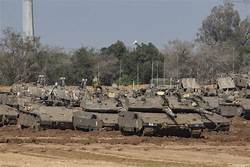
CAIRO - Israeli tanks captured the main road dividing the eastern and western halves of Rafah on Friday, effectively encircling the entire eastern side of the city in the southern Gaza Strip.
Residents described almost constant explosions and gunfire east and northeast of the city on Friday, with intense fighting between Israeli forces and militants from Hamas and Islamic Jihad.
Hamas said it ambushed Israeli tanks near a mosque in the east of the city, a sign the Israelis had penetrated several kilometres from the east to the outskirts of the built-up area.
Israel has ordered civilians out of the eastern half of Rafah, forcing tens of thousands of people to seek shelter outside the city, previously the last refuge of more than a million who fled other parts of the enclave during the war.
Israel says it cannot win the war without assaulting Rafah to root out thousands of Hamas fighters it believes are sheltering there. Hamas says it will fight to defend it. Aid agencies say the battle puts hundreds of thousands of already displaced civilians in harm's way.
"It is not safe, all of Rafah isn't safe as tank shells landed everywhere since yesterday," Abu Hassan, 50, a resident of Tel al-Sultan west of Rafah told Reuters via a chat app.
"I am trying to leave but I can't afford 2,000 shekels to buy a tent for my family," he said. "There is an increased movement of people out of Rafah even from the western areas, though they were not designated as red zones by the occupation.
"The army is targeting all of Rafah not only the east with tank shells and air strikes."
The Israeli military said its forces in eastern Rafah had located several tunnel shafts and troops backed by an air strike fought at close quarters with groups of Hamas fighters, killing several.
It said Israeli jets had hit several sites from which rockets and mortars had been fired towards Israel in recent days, including at the Kerem Shalmon crossing point.
Israeli tanks have already sealed off eastern Rafah from the south, capturing and shutting the only crossing between the enclave and Egypt. An advance on Friday to the Salahuddin road that bisects the strip completed the encirclement of the "red zone" where they have ordered residents out.
The prospect of an assault on Rafah this week has opened up one of the biggest rifts for generations between Israel and its closest ally the United States, which has blocked shipments of weapons to Israel for the first time since the war began.
Prime Minister Benjamin Netanyahu said on Thursday Israel would "fight with our fingernails" if it must. In a U.S. television interview, he said he hoped Israel would overcome its disagreements with President Joe Biden.
Ceasefire talks broke up on Thursday with no agreement to halt the fighting and release hostages captured in the Hamas-led Oct. 7 attacks that precipitated the war.
Hamas had said it agreed at the start of the week to a proposal submitted by Qatari and Egyptian mediators that had previously been accepted by Israel. Israel said the Hamas proposal contained elements it cannot accept.
More than 34,000 Gazans have been killed in the seven months of war, according to health authorities in the Hamas-controlled enclave who say thousands more dead are probably buried under rubble. Israel launched the assault to annihilate Hamas after the Oct. 7 attacks, in which 1,200 people were killed according to Israeli tallies.
Israel Starving Gaza, HRW
- Details
- Written by Super User
- Category: MENA
- Hits: 500
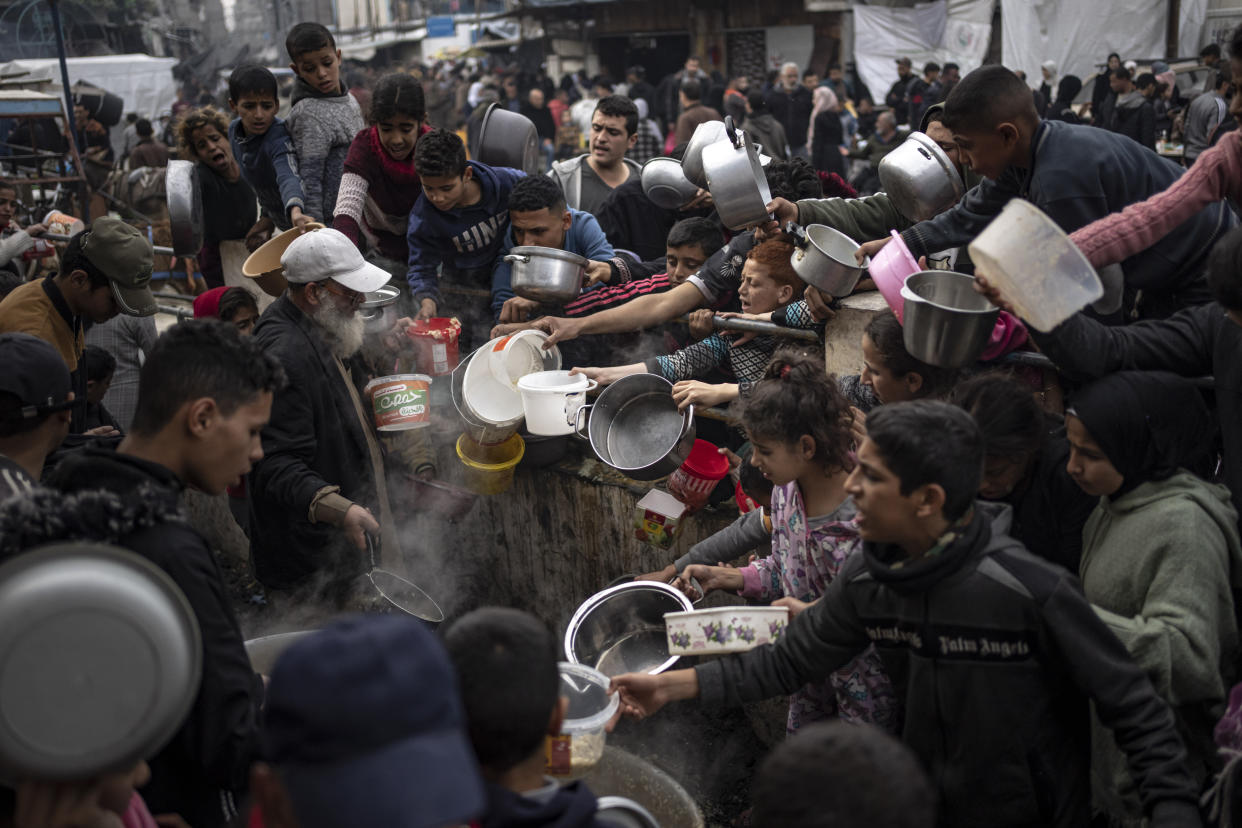
NEW YORK - Israel is starving Gaza, and children are paying the price, according to Human Rights Watch.
It’s doing this in defiance of the World Court, and today, I’m going to go into a bit of detail to explain what’s been happening in The Hague, but please, never forget this fundamental point: the government of Israel is starving Gaza as a weapon of war.
The International Court of Justice has issued legally binding orders requiring Israel to enable the provision of basic services and humanitarian assistance. The Court has done this twice, in fact: first in January and again in March.
Let’s be clear about a couple of things here.
First, the International Court of Justice – the ICJ, also called “the World Court” – is not the same thing as the International Criminal Court, the ICC. They are both based in The Hague, and they are both in the news regarding the Gaza crisis, so I’ve seen some confusion out there, particularly on social media.
The ICC can deal with individual responsibility for atrocity crimes – including war crimes, crimes against humanity, ethnic cleansing, and genocide. It has not issued indictments related to the Gaza crisis yet, but rumors of possible indictments of top Israeli officials, and inappropriate threats of retaliation against ICC officials from US senators and others, have been in the headlines.
The ICJ does not deal with individuals; it deals with states, specifically international legal disputes between states. In the relevant case here, South Africa is alleging that Israel is violating the international Genocide Convention of 1948. The ICJ is being asked to make a legal determination about state responsibility for genocide.
The ICJ has not made that determination one way or the other yet. It may take years before they rule on the question of genocide.
However, the ICJ has issued what are called “provisional measures” to address the immediate situation. Citing “catastrophic conditions” in Gaza in January, the court issued legally binding orders, including an order to enable the provision of basic services and humanitarian assistance. They gave the government of Israel a month to comply, and the government pretty much ignored the Court.
In March, with the “spread of famine and starvation,” the Court imposed additional measures, ordering Israel to ensure the unhindered provision of humanitarian assistance, in full cooperation with the UN, including by opening new land crossing points. Again, Israel contravened the Court and the legally binding order.
It’s true that in April Israeli authorities allowed more aid trucks to enter Gaza, and opened an additional crossing and allowed construction of a port for aid entry. However, the increase in aid was small, nowhere near enough to meet the overwhelming need , according to the UN and humanitarian groups, who reported that Israel continued to block critical aid items.
The most recent news from the ground is even more grim. On May 5, Israeli authorities closed the Kerem Shalom crossing after a Hamas rocket attack, and on May 7, they seized the Rafah crossing, thus blocking aid entering from Egypt currently.
Hundreds of thousands of Palestinians, about half children, face famine, and many risk dying of starvation following Israel’s continued disregard for the law.
In short, Israel is starving Gaza, and children are paying the price, concludes Human Rights Watch.
Main News
Error: No articles to display
latest news
- New blood test can spot breast cancer at earliest stages, scientists
- Sole bidders Saudi Arabia confirmed as hosts of 2034 men’s World Cup
- Nagasaki survivor accepts Nobel Peace Prize, calls for nuclear free world
- Countering Collapse in Haiti
- Crude oil price and production movements, OPEC
- IFAD, Nepal launch $120 million programme to help over 250,000 people
- DiEM25 challenges EU’s inhumane practices towards migrants
- Malibu wildfires forced thousands to evacuate their homes
- DRC: Senior army officials must be investigated for possible crimes
- Netanyahu describes corruption charges against him as ‘ocean of absurdity’ at trial
- Authorities disrupt migrant smuggling supply chain
- Israeli tanks '16 miles from Damascus' as overnight raids 'destroy Assad army's assets'
- In Haiti, women suffer the consequences of gang violence
- ICC arrest warrants for top Israeli officials are step toward justice
- Poland: Brutal Pushbacks at Belarus Border
- Sudan: War Crimes in South Cordovan, HRW
- Europeans politicians quick to promote hate against Syrian refugees
- Pentagon announces $988 million Ukraine Security Assistance package
- Trump says Russia, Iran in 'weakened state,' calls on Putin to make Ukraine deal
- $1.7 billion in airline funds blocked by governments
- 12 Ways to improve circulation for healthy blood flow, Doctors
- Action against ‘phone phishing’ gang in Belgium, Netherlands: 8 arrests
- $282 million program targeting agriculture and food systems
- What’s happening in Syria? The key developments as Assad flees to Russia
- UK nearly as divided as the US, report finds
Europe
DiEM25 challenges EU’s inhumane practices towards migrants
Authorities disrupt migrant smuggling supply chain
ICC arrest warrants for top Israeli officials are step toward justice
Poland: Brutal Pushbacks at Belarus Border
Europeans politicians quick to promote hate against Syrian refugees
Action against ‘phone phishing’ gang in Belgium, Netherlands: 8 arrests
UK nearly as divided as the US, report finds
Starmer rejects choice between EU and US allies
French government at risk of collapsing over 2025 budget
Belgium convicted of crimes against humanity for acts committed during colonisation
23rd International Economic Forum on Africa Monday 9 December
Putin Approves New Budget With Record Defence Spending
UK MPs back Assisted dying bill after emotionally-charged Commons debate
Ireland goes to polls with three parties neck and neck
Putin full of praise for ‘intelligent and experienced’ Trump
UK to continue selling arms to Israel despite Lebanon ceasefire, Starmer says
Crackdown on illegal streaming network with 22 million users worldwide
France says Israel's Netanyahu has immunity from ICC arrest warrant
Number of Europeans diagnosed with HIV rose in 2023 with new cases in most countries
Georgian prime minister suspends EU membership talks until end of 2028
Russian missile fired at Ukraine carried warheads without explosives
Russia advances in Ukraine at fastest monthly pace since start of war
Why are news outlets not covering crackdown on pro-Palestinian journalists in UK?
Starmer and Lammy are ‘monstrous war criminals’, Palestinian lawyer
Storm Bert brings severe flooding across UK
Asia
Nagasaki survivor accepts Nobel Peace Prize, calls for nuclear free world
IFAD, Nepal launch $120 million programme to help over 250,000 people
Embezzling property tycoon scrambles to raise $9bn to avoid death sentence
Pakistan: Everything we know about clashes between Imran Khan supporters and police
India: Mosque survey dispute erupts into deadly clashes
Taliban detained journalists over 250 times since takeover, UN
Philippines summons VP Duterte over threat to have Marcos killed
Four troops killed in Pakistan as protesters demand release of ex-PM Khan
Thousands of Imran Khan supporters defy arrest to head to capital
Pakistan sealing off capital ahead of planned rally by Imran Khan supporters
Fighting between armed sectarian groups in Pakistan kills at least 33 people
Rise in Afghan opium cultivation reflects economic hardship
Volcano erupts in Bali spewing five-mile ash cloud
New Delhi becomes world’s most polluted city as AQI levels reach 1,000
Pakistan’s toxic smog cover is now visible from space
Chinese driver 'angry about divorce settlement' ploughs into crowd leaving 35 dead
Taliban to attend UN climate conference for first time
Suicide bomber kills 24 in explosion at Pakistan train station
China unveils new heavy rocket that looks similar to SpaceX Starship
North Korea’s new ICBM missile records longest flight time yet
Japanese youth committed to fight poverty and hunger with IFAD
Japan's government in flux after election gives no party majority
Indan Muslims face discrimination after restaurants forced to display workers’ names
IFAD and Thailand sign agreement for new regional office in Bangkok
Nobel Peace Prize was awarded to the Japanese organization Nihon Hidankyo
Africa
DRC: Senior army officials must be investigated for possible crimes
Sudan: War Crimes in South Cordovan, HRW
Angola: US President Biden must demand immediate release of five critics
Wife of 'abducted' Ugandan opposition figure says he won't get justice
S.Africa opposition seeks to revive impeachment proceedings against Ramaphosa
Namibia may elect its first-ever female president in elections this week
Botswana turns to cannabis as diamonds are’s for ever
Influencers and social media beat mainstream media in Kenya
Mali’s ruling military appoints new prime minister
Regenerative Agriculture and Peace-building in South-central Somalia
Wits University unveils pan-African AI centre
'The UK will never forget Sudan,' says David Lammy
Sudan’s displaced have endured ‘unimaginable suffering, brutal atrocities’
Nearly half the world’s 1.1 billion poor live in conflict settings
Sudan war deaths are likely much higher than recorded
Africa’s mineral deposits can power the energy transition
The joint force of the AES ready to launch large-scale operations to secure Sahel
Mystery still surrounds death of revered UN chief Hammarskjöld, 63 years after plane crash
IFAD and Sierra Leone partner to boost farm productivity
Mozambique: End violent post-election crackdown ahead of 7 November Maputo march
Africa: Richer countries must commit to pay at COP29
Sudan’s ‘living nightmare’ continues as 11 million flee war
‘Alarming’ situation in Great Lakes Region of DR Congo
Climate change worsened rains in flood-hit African regions, scientists
African progress backslides as coups and war persist
Americas
Countering Collapse in Haiti
Malibu wildfires forced thousands to evacuate their homes
In Haiti, women suffer the consequences of gang violence
Pentagon announces $988 million Ukraine Security Assistance package
Trump says Russia, Iran in 'weakened state,' calls on Putin to make Ukraine deal
Musk dealt legal defeat in battle over $56 billion Tesla pay deal
Autonomous Systems Impact on Modern Warfare
US, Israel, China, and the Shifting Arms Trade in the Middle East
Support the Court, HRW
Private prisons in US stand to cash in from Trump’s mass deportation plan
G7 Foreign Ministers’ Meeting Statement
War Crimes Weapons: Made in the USA
Trump Cabinet and executive branch of different ideas and eclectic personalities
Trump Says He Will Impose 25% Tariff on Canada and Mexico on Day one
Prosecutors drop election interference and documents cases against Trump
Number of children recruited by gangs in Haiti soars by 70%, UNICEF
Archaeologists discover 4,000-year-old canals used to fish by predecessors of ancient Maya
Democrats in Congress urge Biden to sanction Israelis over West Bank violence
Susan Sarandon opens up on exile from Hollywood after PRO-Palestine remarks
What could Trump’s election win mean for Ukraine and the Middle East
Trump deploys garbage truck to trash Biden gaffe at Wisconsin rally
US calls on Israel to tackle ‘catastrophic humanitarian crisis’ in Gaza
Vinicius's Ballon d’Or snub sparks fury in Brazil amid claims of racism
CNN guest thrown off air after telling Mehdi Hasan:‘I hope your beeper doesn’t go off’
Pentagon warns North Korea as 10,000 troops set to join Russia’s war
Australia & Pacific
Australia passes world-first ban on social media for under 16s into law
New Zealanders save over 30 stranded whales by lifting them on sheets
Commonwealth leaders say 'time has come' for discussion on slavery reparations
Generational export reforms to boost AUKUS trade and collaboration
Australia lawmaker calls opposition leader racist over opposition to Gaza refugees
Agreement strengthens AUKUS submarine partnership
Passionate welcome for WikiLeaks founder Assange as he lands in Australia
Violent protests return to New Caledonia as pro-independence leader extradited
EU and Australia accelerate their digital cooperation
Over 2,000 people thought to have been buried alive in Papua New Guinea landslide
Over 670 people died in a massive Papua New Guinea landslide, UN
Macron says extra security to stay in riot-hit New Caledonia as long as needed
New Caledonia riots: Tourists evacuated, President Macron to visit
Hundreds more French police start deploying to secure New Caledonia
France declares state of emergency in New Caledonia as protests rage
Australia’s 2024 National Defence Strategy
Sydney rocked by second mass stabbing as knifeman attacks bishop
Three dead, 1,000 homes destroyed in Papua New Guinea quake
Australia and UK sign defense and security treaty
Australia tightens student visa rules as migration hits record high
Global food crisis and the effects of climate change need urgent action, IFAD
Indonesia, Australia to sign defence pact within months
Australia to ban doxxing after pro-Palestinians publish information about hundreds of Jews
Australia launches inquiry into why Cabinet documents relating to Iraq war remain secret
Australia says AI will help track Chinese submarines under new Aukus plan
MENA
Netanyahu describes corruption charges against him as ‘ocean of absurdity’ at trial
Israeli tanks '16 miles from Damascus' as overnight raids 'destroy Assad army's assets'
What’s happening in Syria? The key developments as Assad flees to Russia
Who is Abu Mohammed al-Golani, leader of insurgency that toppled Syria’s Assad?
Syrian leader Bashar Assad in Moscow, State news agency
IFAD and Kuwait agree to strengthen efforts to support small-scale farmers
Israel responds to Hezbollah rocket attack with airstrikes on south Lebanon
Egypt: Education Restricted for Refugee
At least 25 killed in counter air strikes by Syrian army on rebels in north-west
UNRWA suspends aid delivery to Gaza after lorries looted at gunpoint
Who are the Syrian rebels HTS and why are they advancing?
Syrian rebels capture centre of Aleppo in major blow to Assad regime
World Central Kitchen stops work in Gaza after three aid workers killed by Israeli strike
Lebanon must elect president during 60-day truce with Israel as part of ceasefire
Abbas clarifies PA presidency succession plan but experts unconvinced
At least 10 killed in Israeli air strike on Beit Lahia
UN calls for accountability and investigations in Israel-Hezbollah conflict
Saudi Arabia approves 2025 budget with estimated $315bn
Lebanon faces $25bn reconstruction bill after Israel-Hezbollah ceasefire
Israeli military to remain in Gaza for years, food minister says
Israeli government orders officials to boycott left-leaning paper Haaretz
In East Jerusalem, record number of homes destroyed to drive out Palestinian residents
Biden: Israel and Hezbollah Ceasefire deal can be blueprint to end Gaza war
Heavy rain and high waves wash away tents of Gaza's displaced
Saudi NEOM gigaproject a 'generational investment,' minister
Banners



Videos
-
Future of car-plane, see it to believe it
https://www.youtube.com/watch?v=D4uSWtazRCM
-
Mehdi Hasan: Islam is a peaceful religion
https://www.youtube.com/watch?v=Jy9tNyp03M0 -
Python swallows antelope whole in under an hour
https://www.youtube.com/watch?v=x0rk5zh7RaE
-
Sangoku dance
http://www.youtube.com/watch?v=Df1SkeiPEAo -
flying 3 kites wonder!
https://www.youtube.com/watch?v=nr9KrqN_lIg
-
Korea has talent
http://www.youtube.com/watch?v=tZ46Ot4_lLo&feature=related -
Paul Potts sings Nessun Dorma
http://www.youtube.com/watch?v=1k08yxu57NA
-
Susan Boyle - Britain's Got Talent
http://www.youtube.com/watch?v=RxPZh4AnWyk -
Twist and Pulse - Britain's Got Talent
http://www.youtube.com/watch?v=1RDiBxbT_CA -
Shaheen Jafargholi (HQ) Britain's Got Talent
http://www.youtube.com/watch?v=VYDM3MIzEHo
High-Quality clip of 12-year-old singer Shaheen Jafargholi auditioning on Britain's Got Talent 2009. First he sings Valerie by The Zutons, as performed by Amy Winehouse, but, after Simon interrupts him and asks for a different song, he just blew everyone away. -
David Calvo juggles and solves Rubik's Cubes
http://www.youtube.com/watch?v=lhkzgjOKeLs
-
Outdoor 'bubble pod' hotel unveiled
http://www.youtube.com/watch?v=9IPBKlWf-cA