
Home
ABSA Champions South Africa’s Investment Potential at London Investment Week
- Details
- Written by Super User
- Category: Europe
- Hits: 547
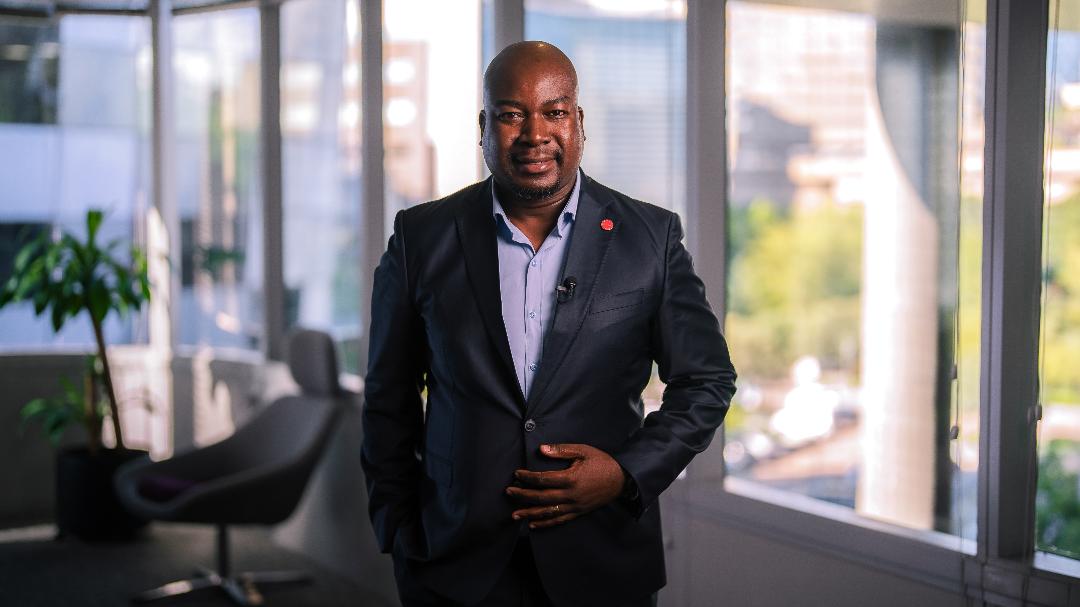
LONDON – ABSA has partnered with Brand South Africa and the South African High Commission in London, on London Investment Week, which brings an exclusive opportunity to engage directly with key decision-makers and industry leaders at the forefront of economic opportunities between South Africa and the United Kingdom (UK).
This unparalleled platform that brings together influential figures from both South Africa and the United Kingdom, including senior government officials, prominent business leaders and global investors. London Investment Week aims to attract significant investment into South Africa, showcasing the country's vibrant economic landscape and marking 30 years of democracy while highlighting opportunities in key growth sectors, including small and medium-sized enterprises (SMEs).
Absa is taking a pioneering role in driving national economic priorities, by partnering with the Government of National Unity (GNU) on the investment roadshow. This collaboration, undertaken on behalf of Brand South Africa, the Department of International Relations and Cooperation (Dirco) and other key institutions, underscores Absa’s strategic alignment with government objectives and its commitment to positioning South Africa as a premier destination for investment. “Despite global and local headwinds, Africa’s economies continue to show remarkable resilience.
The IMF and World Bank project steady growth across the continent in the medium term, driven by structural reforms, infrastructure development, and a growing middle class. In South Africa, inflation is expected to continue to decline, easing the cost-of-living pressures on households.
At Absa, we are committed to supporting these structural reforms and infrastructure advancements that are key to driving Africa’s economic growth,” said Charles Russon, Interim Group Chief Executive Officer designate at Absa Group.
“Our tailored financial solutions and advisory services are designed to help clients and investors navigate emerging trends while contributing to sustainable development across the continent.” Total trade in goods and services between the UK and South Africa was valued at £10.3 billion in the four quarters to the end of Q1 2024, with South Africa being one of the UK’s 30 largest trading partners, accounting for 0.6% of total UK trade.
The potential for growth in sustainable and green investments, particularly in sectors such as renewable energy, infrastructure, and technology, therefore, remains significant. Absa is uniquely positioned to facilitate this growth, having established its UK office in 2018 with the aim of becoming the preferred corporate and investment banking partner for UK and European investors looking to do business in Africa’s growing economies.
The goal is to enable UK businesses to mitigate risks and realise their strategic ambitions in Africa. “At Absa, our vision is bold and long-term. In the coming years, we aim to deepen our roots in key emerging markets while expanding our global reach,” says Russon. “The message is clear: Africa is open for business.
The recent launch of our presence in China marks another milestone in connecting African markets with one of the world’s largest economies. We see immense potential to strengthen ties between Absa and other growing regions, adding to our footprint across the continent, the UK, the US, and Asia.” As Absa continues to champion South Africa’s investment potential, the bank remains committed to ensuring that the benefits of partnerships created at these events contribute to a more inclusive and sustainable economic landscape in South Africa. By facilitating investment in key growth sectors, Absa is playing a vital role in shaping the future of the country’s economy and supporting its integration into the global market.
About Absa Group Limited
Absa Group Limited (“Absa Group”) is listed on the Johannesburg Stock Exchange and is one of Africa’s largest diversified financial services groups. Absa Group offers an integrated set of products and services across personal and business banking, corporate and investment banking, wealth and investment management and insurance.
Absa Group owns majority stakes in banks in Botswana, Ghana, Kenya, Mauritius, Mozambique, Seychelles, South Africa, Tanzania (Absa Bank Tanzania and National Bank of Commerce), Uganda and Zambia and has insurance operations in Botswana, Kenya, Mozambique, South Africa and Zambia. Absa also has representative offices in China, Namibia, Nigeria and the United States, as well as securities entities in the United Kingdom and the United States, along with technology support colleagues in the Czech Republic.
Brutal truth behind Italy’s migrant reduction: beatings, rape by EU-funded forces in Tunisia
- Details
- Written by Super User
- Category: Europe
- Hits: 562
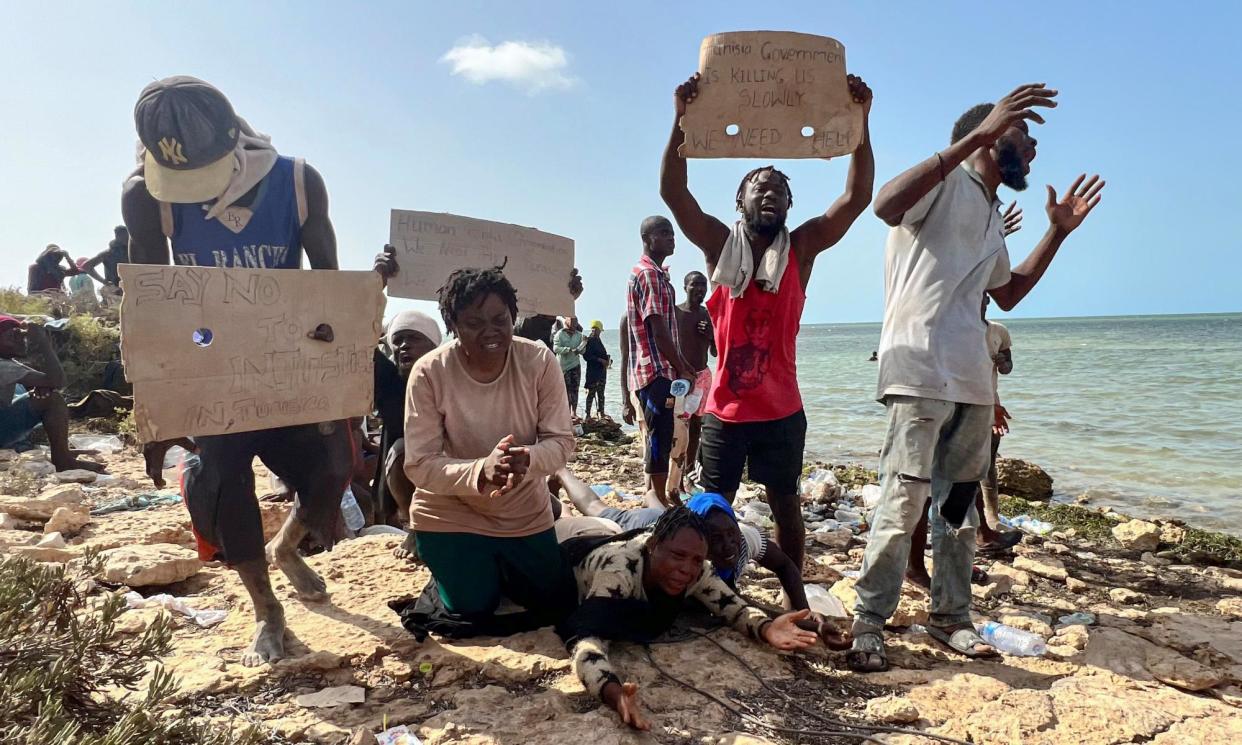
LONDON - When she saw them, lined up at the road checkpoint, Marie sensed the situation might turn ugly. Four officers, each wearing the combat green of Tunisia’s national guard. They asked to look inside her bag, according to the Guardian.
“There was nothing, just some clothes.” For weeks Marie had traversed the Sahara, travelling 3,000 miles from home. Now, minutes from her destination – the north coast of Africa – she feared she might not make it.
An armed officer lunged towards her. Another grabbed her from behind, hoisting her into the air. By the road, on the outskirts of the Tunisian city of Sfax, the 22-year-old was sexually assaulted in broad daylight.
«There was a pregnant woman and they beat her until blood started coming from between her legs. She passed out», Moussa
“It was clear they were going to rape me,” says the Ivorian, her voice wobbling.
Her screams saved her, alerting a group of passing Sudanese refugees. Her attackers retreated to a patrol car.
Marie knows she was lucky. According to Yasmine, who set up a healthcare organisation in Sfax, hundreds of sub-Saharan migrant women have been raped by Tunisian security forces over the past 18 months.
“We’ve had so many cases of violent rape and torture by the police,” she says.
Marie, from the Ivory Coast city of Abidjan, knows others who describe rape by Tunisia’s national guard. “We’re being raped in large numbers; they [the national guard] take everything from us.”
After the attack, Marie headed to a makeshift camp in olive groves near El Amra, a town north of Sfax. Migration experts say that tens of thousands of sub-Saharan refugees and migrants, encircled by police, are now living here. Conditions are described as “horrific”.
Humanitarian organisations, aid agencies, even the UN, are unable to access the camp.
What happened to Marie in May has relevance beyond her continent: her attackers belong to a police force directly funded by Europe.
Her account – along with further testimony gathered by the Guardian – indicates that the EU is funding security forces committing widespread sexual violence against vulnerable women, the most egregious allegations yet to taint last year’s contentious agreement between Brussels and Tunis to prevent migrants reaching Europe.
That agreement saw the EU pledge £89m migration-related funding to Tunisia. Large sums, according to internal documents, appear to have gone to the national guard.
The pact vows to combat migrant smugglers. A Guardian investigation, however, alleges national guard officers are colluding with smugglers to arrange migrant boat trips.
The deal also pledges “respect for human rights”. Yet smugglers and migrants reveal that the national guard is routinely robbing, beating and abandoning women and children in the desert without food or water.
Senior Brussels sources admit the EU is “aware” of the abuse allegations engulfing Tunisia’s security forces but is turning a blind eye in its desperation, led by Italy, to outsource Europe’s southern border to Africa.
In fact there are plans to send more money to Tunisia than publicly admitted.
Despite mounting human rights concerns, the UK prime minister, Keir Starmer, prompted dismay on Monday by expressing interest in the model of paying Tunisia to stop people reaching Europe.
During a meeting in Rome with his rightwing counterpart, Giorgia Meloni, Starmer admired how the pact had prompted a “dramatic” reduction in numbers reaching Italy.
By contrast, the number of refugees and migrants near El Amra continues to grow. One migration observer in Sfax estimates there may be at least 100,000, a number that some feel Tunisia’s increasingly autocratic president, Kais Saied, is deliberately cultivating as a threat to Europe: keep the money coming, or else.
“If Europe stops sending money, he’ll send Europe the migrants. Simple,” says the expert, requesting anonymity.
It is a predicament that provokes questions around Europe’s willingness to ditch commitments to human rights to stymie migration from the global south. And how much abuse of migrants such as Marie is Brussels prepared to overlook before re-examining payments to Saied?
Moussa could almost taste freedom. Ahead, searchlights shimmering in the water: the Italian coastguard which would ferry him to Europe. But behind, closing in quickly, Tunisia’s national maritime guard. Moussa’s dream was soon shattered.
The 28-year-old from Conakry, Guinea, was on board one of four boats intercepted off Sfax during the night of 6 February 2024. The occupants – about 150 men, women and children – were brought ashore to Sfax, handcuffed and herded on to buses.
At about 2am they arrived at a national guard base near the Algerian border. Shortly after, says Moussa, Tunisia’s security forces began methodically raping the women.
“There was a small house outside and every hour or so they’d take two or three women from the base and rape them there. They took a lot of women.
“We could hear them screaming, crying for help. They didn’t care there were 100 witnesses.”
Afterwards Moussa says some could hardly walk. Others were handed back their babies. Some were viciously beaten.
“There was a pregnant woman and they beat her until blood started coming from between her legs. She passed out,” whispers Moussa in the upstairs area of a Sfax coffee shop. Foreign media are not welcome in the city. Outside, a lookout scouts for police.
His account is corroborated by Sfax organisations working with sub-Saharan migrants.
“We’ve had so many cases of women being raped in the desert. They take them from here and attack them,” says Yasmine, whose group helps survivors overcome physical injuries from such attacks.
Requesting anonymity to avoid being detained, Yasmine says their caseload suggests “nine in 10” of all African female migrants arrested around Sfax had experienced sexual violence or “torture” by security forces.
At another cafe in the gritty neighbourhood of Haffara, a smuggler describes witnessing a sexual assault by police.
“It was dawn and the national guard started searching women for money, but really they were searching their private parts. It was very violent,” says Youssef.
Another Sfax smuggler, Khaled, who ferries migrants from Kasserine, near the Algerian border, to Sfax, describes meeting migrant women attacked in the desert.
“Many times I pick up women who are crying, saying they’ve been raped,” says Khaled, a veteran of more than 1,000 trips.
Along with sexual violence, physical beatings appear routine. Joseph, 21, was taken from the El Amra camp last September during a national guard raid.
“We were handcuffed and put on a bus. Police were beating everyone with batons: kids, women, elderly. Everyone.”
Pointing to a scar above his left eye, the Kenyan adds: “I was hit many times.”
Others fared worse: one guard fired a teargas shell into a friend’s face. “His eye was hanging from his socket plus his leg was broken by police so he had to hop.”
« Babies are born in 40C heat without medical help, vaccination, food. How can they survive? » Yasmine
Joseph was left near Algeria where the national guard seized his money, phone and passport. “After thrashing me with a stick they said, ‘Go there [Algeria], don’t come back.’”
In the chaos Joseph lost his friend with the fractured limb. He never saw him again.
Central to the EU-Tunisia deal is its desire to dismantle “criminal networks of migrant smugglers”.
The EU states it wants to improve a code of conduct for Tunisia’s police, an ambition that incorporates human rights training.
Sfax smugglers, however, tell the Guardian of widespread and systematic corruption between them and the national guard.
“The national guard organise the Mediterranean boats. They watch them go into the water then take the boat and motor and sell them back to us,” says Youssef.
Often, he says, the scarcity of £2,000 motors in Sfax means the national guard are the only sellers.
“Smugglers call the police for spare motors. A smuggler might buy the same motor four times from the national guard.”
Another element of the EU-Tunisia deal is facilitating prosecutions against smugglers. When asked for details, the European Commission could not share data on convictions.
The commission says Tunisia and the EU’s police agency, Europol, are seeking to build a partnership to tackle smugglers. Europol says it has no working arrangement with Tunisia.
***
From afar, it looked like a football, bobbing in the water off Sfax. Closer, the grisly truth: a human head, eyes devoured by fish, probably severed from its body by a passing boat.
Ahmed’s most recent catch was on 15 July. On other days he has found legs, occasionally an arm. Usually it is an entire body – normally young, always black – ensnared in his fishing net.
That morning the fishers retrieved one body, then another, and another. Finally, a fourth: a young woman with long hair.
Ahmed brought them ashore but almost none were identified. Some were buried in unmarked graves labelled “African”.
The UN’s refugee agency, UNHCR, normally registers new arrivals, a process “critical to their protection”. But UNHCR has been banned from Sfax by the government.
The agency lists 12,000 refugees or asylum seekers in Tunisia, although officials concede this constitutes a “fraction” of migrant numbers at El Amra.
Abdel, the head of a Sfax-based NGO, which cares for migrant children, estimates a minimum of 100,000.
The UN’s International Organisation for Migration has no updated data, fuelling concern that large numbers of migrants are not being registered. “Individuals disappear as if they never existed,” Abdel says.
More arrive daily. In a smoke-filled Sfax bar, Ali Amami of the Tunisian League for Human Rights says: “Throughout Africa everyone heads here.” Last year Tunisia – with Sfax its centre – was the busiest departure point for migrants reaching Italy.
Now Sfax is off limits. Police have “cleansed” neighbourhoods of migrants, forcing them to El Amra. Cafe owners are arrested if a migrant is caught ordering a coffee.
Police “snatch squads” scout districts such as Haffara, ready to remove any stray migrant.
“Only women have the courage to go shopping,” says Mohamed, a migrant from Guinea. Courage is required. Last month one of his friends – seven months pregnant – visited central Sfax for groceries.
At a checkpoint, police pulled her into a van and took her to the Algerian border. “For days she was begging for water for her and her unborn child.”
Her body was found mid-August near Kasserine, face down in sand. Mohamed estimates up to 50 of his friends have been snatched from Sfax by the national guard and dumped in the desert. Of these five have disappeared or were found dead. Another 10 crossed into Algeria.
Although conditions in the desert are bleak, for many it is preferable to El Amra.
A crackdown, fuelled by Saied’s anti-migrant tirades, has meant organisations that helped El Amra’s migrants have shut. Staff are questioned or arrested. Yasmine folded her group in July after police intimidation.
Images of her colleagues were posted on Facebook, chastising them for helping migrants. “We couldn’t leave our houses for days,” she says.
For the migrants themselves, it means even food and water no longer reach the camp.
“They eat dead animals, roadkill, anything they find,” says Youssef.
Denied all healthcare, Yasmine says the camp is rife with disease including tuberculosis, HIV, scabies and syphilis. Concern is mounting over the infant mortality rate. “Babies are born in 40C heat without medical help, vaccination, food. How can they survive?”
Youssef adds: “I’ve watched women giving birth in the bushes. They need to go to hospital but instead die.”
Unmarked graves of migrants are “everywhere” around El Amra, says Youssef. An olive farmer, he says, recently found two bodies in a shallow grave.
Smuggler Khaled also worries about the body count. He recalls being chased by police as a heavily pregnant woman wailed in the back seat.
“At Sfax I finally turned around and there was a baby! I wept.”
He watched as the mother lowered the infant into a carrier bag and set off walking in 35C heat towards El Amra.
Many more die crossing the Mediterranean. Officially more than 30,000 migrants have gone missing in the Med over the last decade, but many believe this is a significant underestimate.
Few know the route’s escalating risks better than Youssef. More people are crowded on to more dangerous boats. Hastily assembled from metal barrels, the boats float an inch or two above the water.
“They should hold 10 people, but carry 50. From my experience as a smuggler I know many more have died than ever succeeded.”
***
In Sfax, it is known as the “mousetrap”. Abdel, speaking in his office near the city’s medina, says: “You allow the mice over the border but close the sea. Trapped, their numbers boom.”
Related: Revealed: drug cartels force migrant children to work as foot soldiers in Europe’s booming cocaine trade
Using patrol boats provided by Europe, Tunisia’s maritime national guard has prevented more than 50,000 people crossing the Med this year, prompting the steep fall in numbers reaching Italy that so piqued Starmer’s interest this week. “Tunisia is being paid to become Europe’s coastguard,” says Amami.
It is a well-remunerated role, seemingly for its president too. It is claimed that £127m as part of a wider migration and development deal was transferred directly to Saied. Asked for clarification, the European Commission says the payment followed Tunisia meeting “mutually agreed conditions”.
There are also questions about why no EU human rights impact assessment into Tunisia was commissioned before the pact was announced. Similarly, why it has avoided parliamentary oversight.
Emily O’Reilly, the EU ombudsman, says it is inconceivable the EU had no idea the police were repeatedly abusing migrants. “They would not be unaware of the situation in Tunisia.”
Even so, no apparent attempt has been made to suspend payments to Tunis.
Next month O’Reilly publishes the result of her inquiry into the agreement, findings likely to raise fresh questions over its integrity.
A European Commission spokesperson says about reports of abuses by the national guard: “The EU remains engaged to improve the situation on the ground.”
Documents indicate payments have already been made to the national guard. Circulated last December, an action plan indicates that £21m has been “delivered” for patrol vessels, training and equipment for the maritime national guard.
Reports suggest the EU is already planning to extend funding up to £139m over the next three years to Tunisia’s security forces.
The Tunisian authorities have rejected the Guardian’s allegations as “false and groundless”, saying that their security forces operate with “professionalism to uphold the rule of law on our territory, while fully observing international principles and standards”.
A statement says Tunisian authorities “spared no efforts” to meet migrants’ basic needs, combat criminal networks that “exploit vulnerability” and tackle irregular migration by complying with international human rights law.
Yet, as Starmer’s meeting with Meloni this week confirmed, the EU’s deal with Tunisia is increasingly seen as the template for how Europe deals with migration, a salient issue as far right parties gain influence.
Similar deals have already been struck with Mauritania and Egypt. Others are expected to follow.
Back in Tunisia, preparations are under way for presidential elections next month. Saied is certain to win, a coronation that will confirm the unravelling of Tunisia’s democratic experiment since its 2011 revolution.
“In 2011 we dreamed of freedom, now it’s about survival,” says Yasmine.
Marie’s dream remains Europe, but it is slipping away. On a recent voice note from El Amra, she sounds terrified: “There’s a lot going on here. I’m really scared, we’re trapped in hell.”
* Names have been changed for safety reasons.
Russian army to overtake US as world’s second largest
- Details
- Written by Super User
- Category: Europe
- Hits: 597
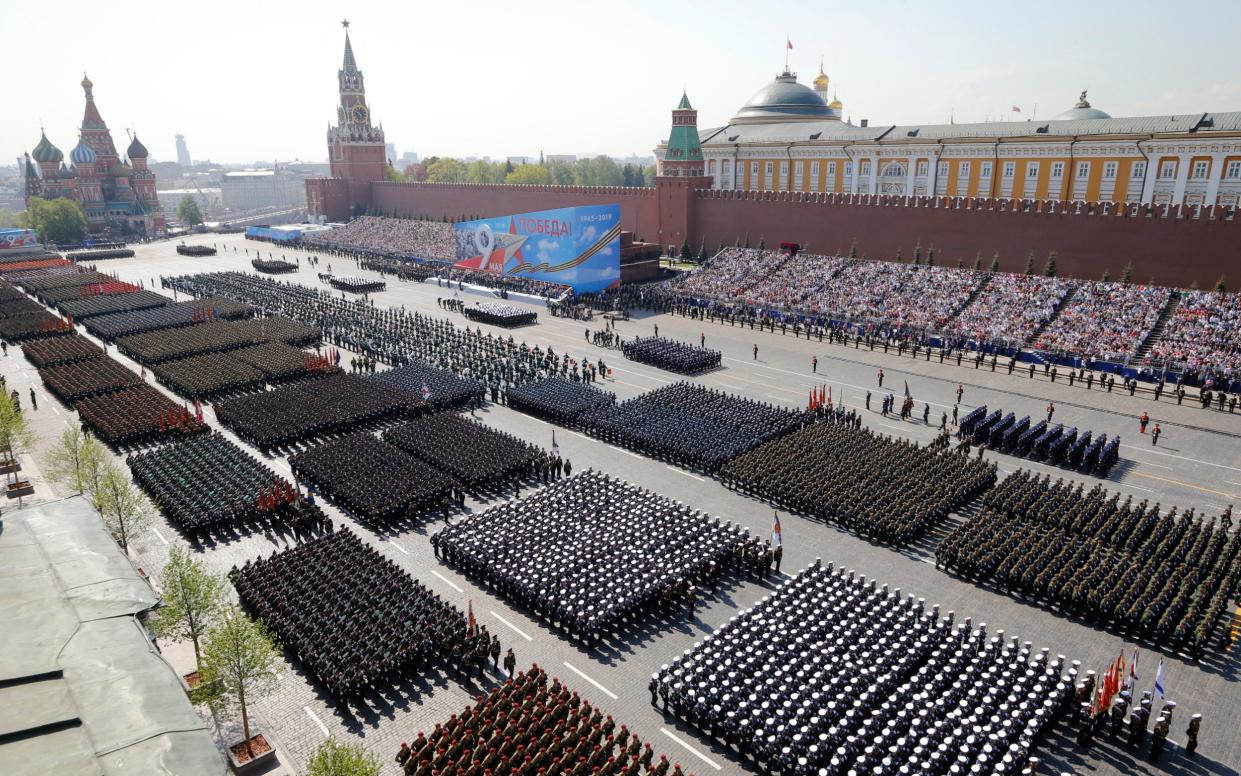
By Joe Barnes
The Kremlin said that it is growing its army to be the second largest in the world as a result of the threat from the West.
Vladimir Putin signed a presidential decree ordering the regular size of the Russian army to be increased by 180,000 troops to 1.5 million active servicemen.
The International Institute for Strategic Studies, a military think tank, said the increase would result in Moscow’s armed forces leapfrogging both India and the US to become only second to China in size.
Dmitry Peskov, the spokesman for the Kremlin, said: “This is due to the number of threats that exist to our country along the perimeter of our borders.
“It is caused by the extremely hostile environment on our western borders and instability on our eastern borders. This demands appropriate measures to be taken.”
The increase comes amid reports of sizeable losses made by the Kremlin’s forces during the invasion of Ukraine.
Western intelligence sources, cited by The Wall Street Journal, estimated that Moscow had lost nearly 200,000 troops and 400,000 wounded since February 2022.
Ukraine also suffered sizeable losses in the almost three years of fighting, the WSJ reported.
A Ukrainian estimate put the number of dead soldiers at 80,000 and the wounded at 400,000.
The losses are proving costly for Russian commanders, who are being forced to rely on poorly trained recruits to advance at pace in eastern Ukraine and mount a counter-offensive against Kyiv’s occupation of the Russian region of Kursk.
“They do have mass, they can push more people onto the front line than the Ukrainians,” a Western official said.
“But it’s worth noting the difference in the training, the quality and the standard of those forces Russia puts on the front line, some of them only days of training and regularly with only weeks of training, so they’re not able to capitalise on some of these advances that they’ve made.”
The size of Russia’s army
The source said Russia was likely able to recruit at a rate of 1,000 troops a day as it looks to plug losses in its manpower.
The size of Russia’s population – about 146 million – is one of Putin’s most potent weapons in a war of attrition against Ukraine.
Since the beginning of the war, Putin has ordered two official increases in the number of combat troops – by 137,000 and 170,000 respectively.
The Russian president also mobilised some 300,000 soldiers between September and October 2022, in a move that saw tens of thousands of military-aged men flee the country.
The Kremlin insists it has no new plans to mobilise more forces to fight in Ukraine, as it relies on volunteers.
Experts said the Russian economy, which has been ravaged by Western sanctions and the cost of fighting, might not be able to stomach the bill for the military increases.
Dara Massicot, a Russian military expert at the Carnegie Endowment for International Peace, said: “There are ways to staff a standing 1.5 million force but the Kremlin will not like them if they are truly grappling with what that requires.
“Are they really able to boost the defence budget to sustain procurement and this requirement?”
It had recently been reported that the Kremlin was paying volunteers from the Moscow region up to £50,000 in wages and bonuses to fight in Ukraine – about four times the average annual wage.
The government paid out about three trillion rubles (£27 billion) in salaries and compensation to soldiers and their families between July 2023 and June 2024, according to researchers Re:Russia.
The figure amounts to about 1.6 per cent of Russia’s expected gross domestic product for the year, as well as about 8 per cent of its federal budget expenditure.
Hereditary peers to be removed from House of Lords next summer
- Details
- Written by Super User
- Category: Europe
- Hits: 577
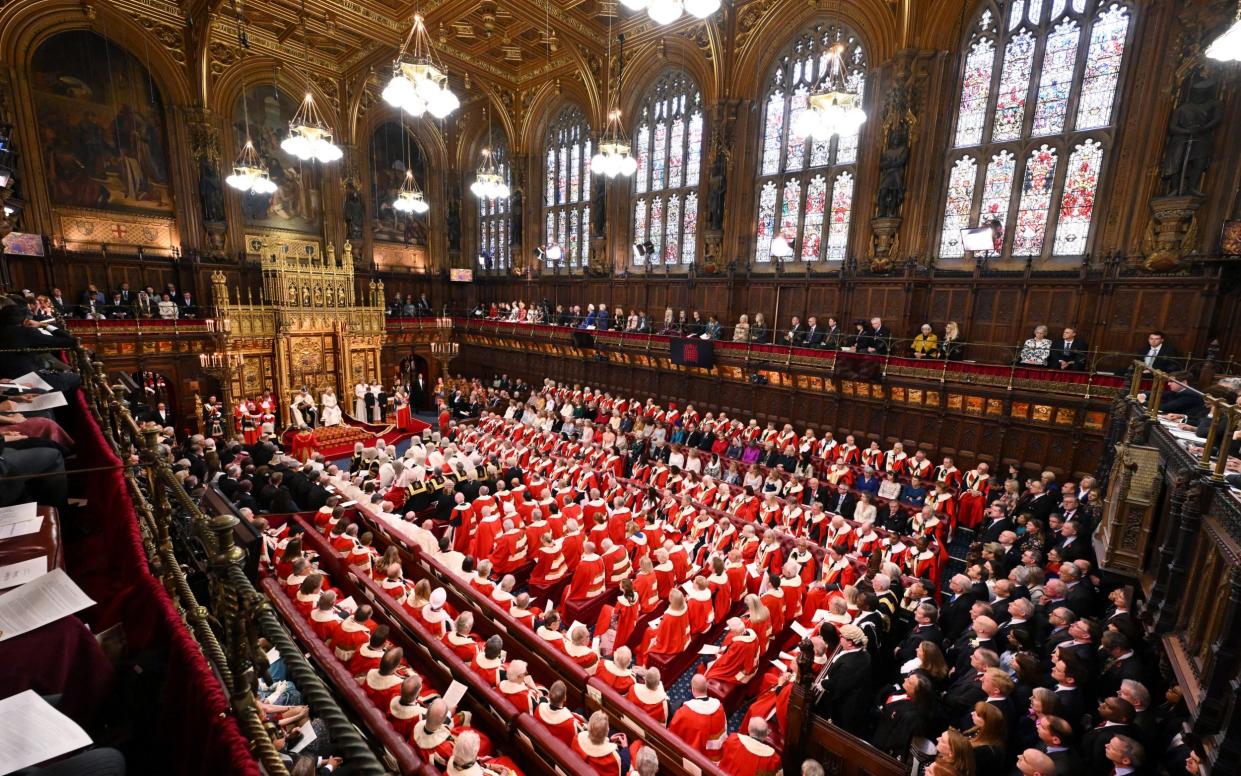
LONDON - All remaining hereditary peers will be removed from the House of Lords next summer, ministers announced as they said the “accident of birth” should not give people the right to make laws.
The Government will on Thursday introduce legislation to remove the right of the final 92 hereditary peers to sit and vote in the Upper Chamber.
Ministers said it would complete the process started a quarter of a century ago to “end appointments to the House of Lords based on the families select individuals are born into”.
The new legislation has to pass through the Commons and the Lords before receiving Royal Assent, meaning it will not be until the end of the parliamentary session next July that they will be removed.
Nick Thomas-Symonds, minister for the constitution, said: “This is a landmark reform to our constitution.
“The hereditary principle in law-making has lasted for too long and is out of step with modern Britain. The second chamber plays a vital role in our constitution and people should not be voting on our laws in Parliament by an accident of birth.
“This Bill shows this Government’s commitment to delivering on our manifesto and is an important part of putting politics in the service of working people.”
Reductions to size of House planned
Ministers have also promised to further reduce the size of the House, such as by fixing a retirement age.
However, these reforms will be consulted on before being introduced in another bill later in Labour’s term of office.
Eventually, the Government wants to replace the Lords with an alternative second chamber that is more representative of the UK.
A separate House of Lords was created in the fourteenth century, made up of noblemen from throughout England, all of whom were male. Women were not admitted until 1963.
In 1999, Tony Blair’s government reached a deal with the Tories to massively reduce the number of hereditary peers from around 800 to 92.
He was fearful of going further lest the Conservatives use their huge majority in the Upper House to disrupt his legislative agenda.
The Tories made no major changes to the set-up, meaning the 92 hereditaries have remained until now.
It has therefore fallen to Sir Keir Starmer to end the situation where the UK is just one of two countries in the world to retain a hereditary element in its legislature.
Baroness Smith, leader of the House of Lords, said: “While recognising the valuable contributions many hereditary peers have made to Parliament, it is right that this reform is being brought forward now – completing work we began 25 years ago.
“Removing the hereditary principle from the Lords will deliver on a specific manifesto commitment. It will also help deliver on our commitment to reduce the size of the second chamber, as we bring forward further reforms.”
Ministers have already introduced a bill to increase the number of female bishops in the House of Lords.
It had been thought that the bill removing peers might keep two aristocrats – the Earl Marshal and Lord Great Chamberlain – in the House of Lords because of their positions in organising coronations and other major events.
But on Wednesday the Government said both would be excluded, vowing that it would not prevent them from carrying out their ceremonial functions.
Main News
Error: No articles to display
latest news
- New blood test can spot breast cancer at earliest stages, scientists
- Sole bidders Saudi Arabia confirmed as hosts of 2034 men’s World Cup
- Nagasaki survivor accepts Nobel Peace Prize, calls for nuclear free world
- Countering Collapse in Haiti
- Crude oil price and production movements, OPEC
- IFAD, Nepal launch $120 million programme to help over 250,000 people
- DiEM25 challenges EU’s inhumane practices towards migrants
- Malibu wildfires forced thousands to evacuate their homes
- DRC: Senior army officials must be investigated for possible crimes
- Netanyahu describes corruption charges against him as ‘ocean of absurdity’ at trial
- Authorities disrupt migrant smuggling supply chain
- Israeli tanks '16 miles from Damascus' as overnight raids 'destroy Assad army's assets'
- In Haiti, women suffer the consequences of gang violence
- ICC arrest warrants for top Israeli officials are step toward justice
- Poland: Brutal Pushbacks at Belarus Border
- Sudan: War Crimes in South Cordovan, HRW
- Europeans politicians quick to promote hate against Syrian refugees
- Pentagon announces $988 million Ukraine Security Assistance package
- Trump says Russia, Iran in 'weakened state,' calls on Putin to make Ukraine deal
- $1.7 billion in airline funds blocked by governments
- 12 Ways to improve circulation for healthy blood flow, Doctors
- Action against ‘phone phishing’ gang in Belgium, Netherlands: 8 arrests
- $282 million program targeting agriculture and food systems
- What’s happening in Syria? The key developments as Assad flees to Russia
- UK nearly as divided as the US, report finds
Europe
DiEM25 challenges EU’s inhumane practices towards migrants
Authorities disrupt migrant smuggling supply chain
ICC arrest warrants for top Israeli officials are step toward justice
Poland: Brutal Pushbacks at Belarus Border
Europeans politicians quick to promote hate against Syrian refugees
Action against ‘phone phishing’ gang in Belgium, Netherlands: 8 arrests
UK nearly as divided as the US, report finds
Starmer rejects choice between EU and US allies
French government at risk of collapsing over 2025 budget
Belgium convicted of crimes against humanity for acts committed during colonisation
23rd International Economic Forum on Africa Monday 9 December
Putin Approves New Budget With Record Defence Spending
UK MPs back Assisted dying bill after emotionally-charged Commons debate
Ireland goes to polls with three parties neck and neck
Putin full of praise for ‘intelligent and experienced’ Trump
UK to continue selling arms to Israel despite Lebanon ceasefire, Starmer says
Crackdown on illegal streaming network with 22 million users worldwide
France says Israel's Netanyahu has immunity from ICC arrest warrant
Number of Europeans diagnosed with HIV rose in 2023 with new cases in most countries
Georgian prime minister suspends EU membership talks until end of 2028
Russian missile fired at Ukraine carried warheads without explosives
Russia advances in Ukraine at fastest monthly pace since start of war
Why are news outlets not covering crackdown on pro-Palestinian journalists in UK?
Starmer and Lammy are ‘monstrous war criminals’, Palestinian lawyer
Storm Bert brings severe flooding across UK
Asia
Nagasaki survivor accepts Nobel Peace Prize, calls for nuclear free world
IFAD, Nepal launch $120 million programme to help over 250,000 people
Embezzling property tycoon scrambles to raise $9bn to avoid death sentence
Pakistan: Everything we know about clashes between Imran Khan supporters and police
India: Mosque survey dispute erupts into deadly clashes
Taliban detained journalists over 250 times since takeover, UN
Philippines summons VP Duterte over threat to have Marcos killed
Four troops killed in Pakistan as protesters demand release of ex-PM Khan
Thousands of Imran Khan supporters defy arrest to head to capital
Pakistan sealing off capital ahead of planned rally by Imran Khan supporters
Fighting between armed sectarian groups in Pakistan kills at least 33 people
Rise in Afghan opium cultivation reflects economic hardship
Volcano erupts in Bali spewing five-mile ash cloud
New Delhi becomes world’s most polluted city as AQI levels reach 1,000
Pakistan’s toxic smog cover is now visible from space
Chinese driver 'angry about divorce settlement' ploughs into crowd leaving 35 dead
Taliban to attend UN climate conference for first time
Suicide bomber kills 24 in explosion at Pakistan train station
China unveils new heavy rocket that looks similar to SpaceX Starship
North Korea’s new ICBM missile records longest flight time yet
Japanese youth committed to fight poverty and hunger with IFAD
Japan's government in flux after election gives no party majority
Indan Muslims face discrimination after restaurants forced to display workers’ names
IFAD and Thailand sign agreement for new regional office in Bangkok
Nobel Peace Prize was awarded to the Japanese organization Nihon Hidankyo
Africa
DRC: Senior army officials must be investigated for possible crimes
Sudan: War Crimes in South Cordovan, HRW
Angola: US President Biden must demand immediate release of five critics
Wife of 'abducted' Ugandan opposition figure says he won't get justice
S.Africa opposition seeks to revive impeachment proceedings against Ramaphosa
Namibia may elect its first-ever female president in elections this week
Botswana turns to cannabis as diamonds are’s for ever
Influencers and social media beat mainstream media in Kenya
Mali’s ruling military appoints new prime minister
Regenerative Agriculture and Peace-building in South-central Somalia
Wits University unveils pan-African AI centre
'The UK will never forget Sudan,' says David Lammy
Sudan’s displaced have endured ‘unimaginable suffering, brutal atrocities’
Nearly half the world’s 1.1 billion poor live in conflict settings
Sudan war deaths are likely much higher than recorded
Africa’s mineral deposits can power the energy transition
The joint force of the AES ready to launch large-scale operations to secure Sahel
Mystery still surrounds death of revered UN chief Hammarskjöld, 63 years after plane crash
IFAD and Sierra Leone partner to boost farm productivity
Mozambique: End violent post-election crackdown ahead of 7 November Maputo march
Africa: Richer countries must commit to pay at COP29
Sudan’s ‘living nightmare’ continues as 11 million flee war
‘Alarming’ situation in Great Lakes Region of DR Congo
Climate change worsened rains in flood-hit African regions, scientists
African progress backslides as coups and war persist
Americas
Countering Collapse in Haiti
Malibu wildfires forced thousands to evacuate their homes
In Haiti, women suffer the consequences of gang violence
Pentagon announces $988 million Ukraine Security Assistance package
Trump says Russia, Iran in 'weakened state,' calls on Putin to make Ukraine deal
Musk dealt legal defeat in battle over $56 billion Tesla pay deal
Autonomous Systems Impact on Modern Warfare
US, Israel, China, and the Shifting Arms Trade in the Middle East
Support the Court, HRW
Private prisons in US stand to cash in from Trump’s mass deportation plan
G7 Foreign Ministers’ Meeting Statement
War Crimes Weapons: Made in the USA
Trump Cabinet and executive branch of different ideas and eclectic personalities
Trump Says He Will Impose 25% Tariff on Canada and Mexico on Day one
Prosecutors drop election interference and documents cases against Trump
Number of children recruited by gangs in Haiti soars by 70%, UNICEF
Archaeologists discover 4,000-year-old canals used to fish by predecessors of ancient Maya
Democrats in Congress urge Biden to sanction Israelis over West Bank violence
Susan Sarandon opens up on exile from Hollywood after PRO-Palestine remarks
What could Trump’s election win mean for Ukraine and the Middle East
Trump deploys garbage truck to trash Biden gaffe at Wisconsin rally
US calls on Israel to tackle ‘catastrophic humanitarian crisis’ in Gaza
Vinicius's Ballon d’Or snub sparks fury in Brazil amid claims of racism
CNN guest thrown off air after telling Mehdi Hasan:‘I hope your beeper doesn’t go off’
Pentagon warns North Korea as 10,000 troops set to join Russia’s war
Australia & Pacific
Australia passes world-first ban on social media for under 16s into law
New Zealanders save over 30 stranded whales by lifting them on sheets
Commonwealth leaders say 'time has come' for discussion on slavery reparations
Generational export reforms to boost AUKUS trade and collaboration
Australia lawmaker calls opposition leader racist over opposition to Gaza refugees
Agreement strengthens AUKUS submarine partnership
Passionate welcome for WikiLeaks founder Assange as he lands in Australia
Violent protests return to New Caledonia as pro-independence leader extradited
EU and Australia accelerate their digital cooperation
Over 2,000 people thought to have been buried alive in Papua New Guinea landslide
Over 670 people died in a massive Papua New Guinea landslide, UN
Macron says extra security to stay in riot-hit New Caledonia as long as needed
New Caledonia riots: Tourists evacuated, President Macron to visit
Hundreds more French police start deploying to secure New Caledonia
France declares state of emergency in New Caledonia as protests rage
Australia’s 2024 National Defence Strategy
Sydney rocked by second mass stabbing as knifeman attacks bishop
Three dead, 1,000 homes destroyed in Papua New Guinea quake
Australia and UK sign defense and security treaty
Australia tightens student visa rules as migration hits record high
Global food crisis and the effects of climate change need urgent action, IFAD
Indonesia, Australia to sign defence pact within months
Australia to ban doxxing after pro-Palestinians publish information about hundreds of Jews
Australia launches inquiry into why Cabinet documents relating to Iraq war remain secret
Australia says AI will help track Chinese submarines under new Aukus plan
MENA
Netanyahu describes corruption charges against him as ‘ocean of absurdity’ at trial
Israeli tanks '16 miles from Damascus' as overnight raids 'destroy Assad army's assets'
What’s happening in Syria? The key developments as Assad flees to Russia
Who is Abu Mohammed al-Golani, leader of insurgency that toppled Syria’s Assad?
Syrian leader Bashar Assad in Moscow, State news agency
IFAD and Kuwait agree to strengthen efforts to support small-scale farmers
Israel responds to Hezbollah rocket attack with airstrikes on south Lebanon
Egypt: Education Restricted for Refugee
At least 25 killed in counter air strikes by Syrian army on rebels in north-west
UNRWA suspends aid delivery to Gaza after lorries looted at gunpoint
Who are the Syrian rebels HTS and why are they advancing?
Syrian rebels capture centre of Aleppo in major blow to Assad regime
World Central Kitchen stops work in Gaza after three aid workers killed by Israeli strike
Lebanon must elect president during 60-day truce with Israel as part of ceasefire
Abbas clarifies PA presidency succession plan but experts unconvinced
At least 10 killed in Israeli air strike on Beit Lahia
UN calls for accountability and investigations in Israel-Hezbollah conflict
Saudi Arabia approves 2025 budget with estimated $315bn
Lebanon faces $25bn reconstruction bill after Israel-Hezbollah ceasefire
Israeli military to remain in Gaza for years, food minister says
Israeli government orders officials to boycott left-leaning paper Haaretz
In East Jerusalem, record number of homes destroyed to drive out Palestinian residents
Biden: Israel and Hezbollah Ceasefire deal can be blueprint to end Gaza war
Heavy rain and high waves wash away tents of Gaza's displaced
Saudi NEOM gigaproject a 'generational investment,' minister
Banners



Videos
-
Future of car-plane, see it to believe it
https://www.youtube.com/watch?v=D4uSWtazRCM
-
Mehdi Hasan: Islam is a peaceful religion
https://www.youtube.com/watch?v=Jy9tNyp03M0 -
Python swallows antelope whole in under an hour
https://www.youtube.com/watch?v=x0rk5zh7RaE
-
Sangoku dance
http://www.youtube.com/watch?v=Df1SkeiPEAo -
flying 3 kites wonder!
https://www.youtube.com/watch?v=nr9KrqN_lIg
-
Korea has talent
http://www.youtube.com/watch?v=tZ46Ot4_lLo&feature=related -
Paul Potts sings Nessun Dorma
http://www.youtube.com/watch?v=1k08yxu57NA
-
Susan Boyle - Britain's Got Talent
http://www.youtube.com/watch?v=RxPZh4AnWyk -
Twist and Pulse - Britain's Got Talent
http://www.youtube.com/watch?v=1RDiBxbT_CA -
Shaheen Jafargholi (HQ) Britain's Got Talent
http://www.youtube.com/watch?v=VYDM3MIzEHo
High-Quality clip of 12-year-old singer Shaheen Jafargholi auditioning on Britain's Got Talent 2009. First he sings Valerie by The Zutons, as performed by Amy Winehouse, but, after Simon interrupts him and asks for a different song, he just blew everyone away. -
David Calvo juggles and solves Rubik's Cubes
http://www.youtube.com/watch?v=lhkzgjOKeLs
-
Outdoor 'bubble pod' hotel unveiled
http://www.youtube.com/watch?v=9IPBKlWf-cA