
Home
Pressure rises for India lockdown; surge breaks record again
- Details
- Written by northsouth
- Category: Asia
- Hits: 1189
By NEHA MEHROTRA and ASHOK SHARMA
NEW DELHI - Indian Prime Minister Narendra Modi faced growing pressure on Friday to impose a strict nationwide lockdown, despite the economic pain it will exact, as a startling surge in coronavirus cases that has pummelled the country's health system shows no signs of abating.
Many medical experts, opposition leaders and even Supreme Court judges are calling for national restrictions, arguing that a patchwork of state rules is insufficient to quell the rise in infections.
Indian television stations broadcast images of patients lying on stretchers outside hospitals waiting to be admitted, with hospital beds and critical oxygen in short supply. People infected with Covid-19 in villages are being treated in makeshift outdoor clinics, with IV drips hanging from trees.
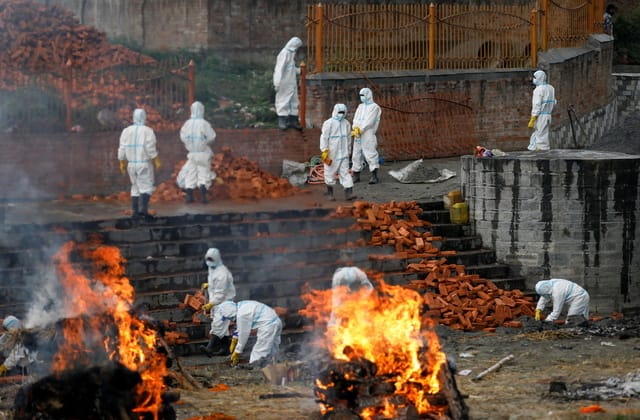
As deaths soar, crematoriums and burial grounds have been swamped with bodies, and relatives often wait hours to perform the last rites for their loved ones.
The situation is so dramatic that among those calling for a strict lockdown are merchants who know their businesses will be affected but see no other way out.
“Only if our health is good, will we be able to earn,” said Aruna Ramjee, a florist in the southern Indian city of Bengaluru. “The lockdown will help everyone, and coronavirus spread will also come down.”
The alarming picture has gripped the world's attention, just as many developed countries are seeing vaccinations drive down infections and are beginning to open up. India's surge has served as a warning to other countries with fragile health systems — and also has weighed heavily on global efforts to end the pandemic since the country is a major vaccine producer but has been forced to delay exports of shots.
Infections have swelled in India since February in a disastrous turn blamed on more contagious variants as well as government decisions to allow massive crowds to gather for religious festivals and political rallies. On Friday India reported a new daily record of 414,188 confirmed cases and 3,915 additional deaths. The official daily death count has stayed over 3,000 for the past 10 days.
That brings the total to more than 21.4 million Covid-19 infections and over 234,000 deaths. Experts say even those dramatic tolls are undercounts.
Over the past month, nearly a dozen of India’s 28 federal states have announced some restrictions, but they fall short of a nationwide lockdown imposed last year that experts credit with helping to contain the virus for a time. Those measures, which lasted two months, included stay-at-home orders, a ban on international and domestic flights and a suspension of passenger service on the nation's extensive rail system.
The government provided free wheat, rice and lentils to the poorest for nearly a year and also small cash payments, while Modi also vowed an economic relief package of more than $260 billion. But the lockdown, imposed on four hours’ notice, also stranded tens of millions of migrant workers who were left jobless and fled to villages, with many dying along the way.
The national restrictions caused the economy to contract by a staggering 23% in the second quarter last year, though a strong recovery was under way before infections skyrocketed recently.
Some who remember last year's ordeal remain against a full lockdown.
“If I had to choose between dying of the virus and dying of hunger, I would choose the virus,” said Shyam Mishra, a construction worker who was already forced to change jobs and start selling vegetables when a lockdown was imposed on the capital, New Delhi.
Modi has so far left the responsibility for fighting the virus in this current surge to poorly equipped state governments and faced accusations of doing too little. His government has countered that it is doing everything it can, amid a "once-in-a-century crisis.”
Amid a shortage of oxygen, the Supreme Court has stepped in. It ordered the federal government to increase the supply of medical oxygen to New Delhi after 12 Covid-19 patients died last week after a hospital ran out of supplies for 80 minutes.
Three justices called on the government this week to impose a lockdown, including a ban on mass gatherings, in the “interest of public welfare."
Dr. Randeep Guleria, a government health expert, said he believes that a total lockdown is needed like last year, especially in areas where more than 10% of those tested have contracted Covid-19.
Rahul Gandhi, an opposition Congress party leader, in a letter to Modi on Friday, also demanded a total lockdown and government support to feed the poor, warning “the human cost will result in many more tragic consequences for our people.”
As the world watches India with alarm, some outside of its borders have joined the calls. Dr. Anthony Fauci, the United States’ top infectious disease expert, suggested that a complete shutdown in India may be needed for two to four weeks.
“As soon as the cases start coming down, you can vaccinate more people and get ahead of the trajectory of the outbreak of the pandemic,” Fauci said in an interview with the Indian news channel CNN News18 on Thursday.
Still, Modi's policy of selected lockdowns is supported by some experts, including Vineeta Bal, a scientist at the National Institute of Immunology. She said different states have different needs, and local particularities need to be taken into account for any policy to work.
In most instances, in places where health infrastructure and expertise are good, localised restrictions at the level of a state, or even a district, are a better way to curb the spread of infections, said Bal. “A centrally mandated lockdown will just be inappropriate,” she said.
Srinath Reddy, president of the Public Health Foundation of India, a public-private consultancy, acknowledged that the intensity of the pandemic was different in each state, but said a “coordinated countrywide strategy” was still needed.
According to Reddy, decisions need to be based on local conditions but should be closely coordinated, “like an orchestra which plays the same sheet music but with different instruments.”
Myanmar’s military disappearing young men to crush uprising
- Details
- Written by northsouth
- Category: Asia
- Hits: 1112
By VICTORIA MILKO and KRISTEN GELINEAU
JAKARTA — Myanmar’s security forces moved in and the street lamps went black. In house after house, people shut off their lights. Darkness swallowed the block.
Huddled inside her home in this neighborhood of Yangon, 19-year-old Shwe dared to peek out her window into the inky night. A flashlight shone back, and a man’s voice ordered her not to look.
Two gunshots rang out. Then a man’s scream: “HELP!” When the military’s trucks finally rolled away, Shwe and her family emerged to look for her 15-year-old brother, worried about frequent abductions by security forces.
“I could feel my blood thumping,” she says. “I had a feeling that he might be taken.”
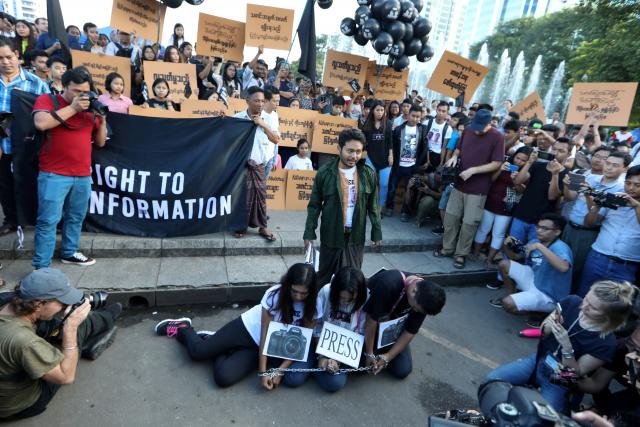
Across the country, Myanmar’s security forces are arresting and forcibly disappearing thousands of people, especially boys and young men, in a sweeping bid to break the back of a three-month uprising against a military takeover. In most cases, the families of those taken do not know where they are, according to an Associated Press analysis of more than 3,500 arrests since February.
UNICEF, the U.N. children’s agency, is aware of around 1,000 cases of children or young people who have been arbitrarily arrested and detained, many without access to lawyers or their families. Though it is difficult to get exact data, UNICEF says the majority are boys.
It is a technique the military has long used to instill fear and to crush pro-democracy movements. The boys and young men are taken from homes, businesses and streets, under the cover of night and sometimes in the brightness of day.
Some end up dead. Many are imprisoned and sometimes tortured. Many more are missing.
“We’ve definitely moved into a situation of mass enforced disappearances,” says Matthew Smith, cofounder of the human rights group Fortify Rights, which has collected evidence of detainees being killed in custody. “We’re documenting and seeing widespread and systematic arbitrary arrests.”
The AP is withholding Shwe’s full name, along with those of several others, to protect them from retaliation by the military.
The autobody shop in Shwe’s neighborhood was a regular hangout for local boys. On the night of March 21, her brother had gone there to chill out like he usually did.
As Shwe approached the shop, she saw it had been ransacked. Frantic, she and her father scoured the building for any sign of their beloved boy.
But he was gone, and the floor was covered in blood.
Ever since the military seized control in February, the conflict in Myanmar has become increasingly bloody. Security forces have killed more than 700 people, including a boy as young as 9.
In the meantime, the faces of the missing have flooded the Internet in growing numbers. Online videos show soldiers and police beating and kicking young men as they’re shoved into vans, even forcing captives to crawl on all fours and hop like frogs.
Recently, photos of young people detained by security forces also have begun circulating online and on military-controlled Myawaddy TV, their faces bloodied, with clear markings of beatings and possible torture. The military’s openness in broadcasting such photos and brutalizing people in daylight is one more sign that its goal is to intimidate.
At least 3,500 people have been detained since the military takeover began, more than three-quarters of whom are male, according to an analysis of data collected by the Assistance Association for Political Prisoners, which monitors deaths and arrests. Of the 419 men whose ages were recorded in the group’s database, nearly two-thirds are under age 30, and 78 are teenagers.
Nearly 2,700 of the detainees are being held at undisclosed locations, according to an AAPP spokesman. The group says its numbers are likely an undercount.
“The military are trying to turn civilians, striking workers, and children into enemies,” says Ko Bo Kyi, AAPP’s joint secretary. “They think if they can kill off the boys and young men, then they can kill off the revolution.”
After receiving questions from The Associated Press, the military, known as the Tatmadaw, called a Zoom press conference, during which it dubbed the AAPP a “baseless organization,” suggested its data was inaccurate, and denied security forces are targeting young men.
“The security forces are not arresting based on genders and ages,” said Capt. Aye Thazin Myint, a military spokeswoman. “They are only detaining anyone who is rioting, protesting, causing unrest, or any actions along those lines.”
Some of those snatched by security forces were protesting. Some have links to the military’s rival political party, most notably Aung San Suu Kyi, who led the elected government that the military toppled and is now under house arrest. Others are taken for no discernable reason. They are typically charged with Section 505(A) of the Penal Code, which, in part, criminalizes comments that “cause fear” or spread “false news.”
Both the military and police — who fall under the Tatmadaw’s command via the Ministry of Home Affairs — have been involved in the arrests and disappearances, sometimes working in tandem, according to interviews with detainees and families. Experts believe that suggests a coordinated strategy.
“The Myanmar police force and the Tatmadaw moved in in a very deliberate way, in a coordinated way, in similar ways, in disparate locations, which to us would indicate that they were working according to orders,” says Smith of Fortify Rights. “It would appear as though there was ... some national level communication and coordination taking place.”
Manny Maung, a Myanmar researcher for Human Rights Watch, says one woman she spoke with described being viciously beaten by police until what looked like a senior military official told them to stop.
“They’re definitely following orders from military officials,” Maung says. “And whether they’re coordinating — they’re certainly turning up to places together.”
So desperate for information are the loved ones of the lost that some families have resorted to a grim experiment: They send food into the prisons and hope if it isn’t sent back out, that means their relatives are still inside.
Myanmar human rights activist Wai Hnin Pwint Thon is intimately acquainted with the Tatmadaw’s tactics. Her father, famed political activist Mya Aye, was arrested during a 1988 uprising against military rule, and the family waited months before they learned he was in prison.
He was arrested again on the first day of this year’s military takeover. For two months, the military gave Wai Hnin Pwint Thon’s family no information on his whereabouts. On April 1, the family learned he was being held at Yangon’s notorious Insein prison.
“I can’t imagine families of young people who are 19, 20, 21, in prison… We are this worried and we’re used to this situation,” she says. “I’m trying to hold onto hope, but the situation is getting worse every day.”
Mee, a 27-year-old villager in the northern region of Mandalay, watched as children on motorbikes raced past her house toward the woods. Not long after, the village elders arrived with a dire warning: All the boys must leave and get somewhere safe. The soldiers might be coming.
Just two hours later, Mee says, the elders asked the girls to hide, too.
The military’s scare tactics have proven enormously effective. In villages and cities across the country, residents regularly take turns holding night watches, banging pots and pans or yelling to neighbors from the street if soldiers or police are spotted.
“I am more afraid of being arrested than getting shot,” says one 29-year-old man who was arrested, beaten and later released, and who spoke on condition of anonymity to avoid retribution. “I have a chance of dying on the spot with just one shot. But being arrested, I am afraid that they would torture me.”
Fearing for her life on that March afternoon, Mee and hundreds of fellow villagers fled to pineapple farms in the surrounding hills. When she arrived, she saw scores of people from other villages hiding in the forest.
That night, as mosquitos swarmed and sounds from the forest haunted them, the women stayed inside a small bamboo tent while the boys took turns standing guard. No one slept.
Mee was terrified but not surprised. Many of the villagers had run from the military and hidden in the woods before.
“It’s heartbreaking,” she says.
For decades, the Tatmadaw has used arbitrary arrests, disappearances, forced labor and other abuses to crush pro-democracy movements and suppress minorities, including its notoriously brutal 2017 campaign of persecution against Rohingya Muslims.
“Sometimes communities are asked to provide a number of young men on a ‘voluntary’ basis; sometimes they are taken,” Laetitia van den Assum, a former diplomat and a member of the Advisory Commission on Rakhine State, said in an e-mail.
Arbitrary arrests continue across the country daily. Just two weeks earlier, a few minutes away from Mee’s village, 24-year-old philosophy student Ko Ko was walking home from a protest with a friend when they were arrested. His parents learned of their imprisonment from friends of friends, not officials.
More than a month later, his parents still haven’t heard from their only son, says Han, a neighbor. He’s part of an unlucky cohort: at least 44 people taken from the town are yet to be released, Han says.
While many of the young men in Mee’s village returned home after two nights in the pineapple fields, some continue to sleep there. Mee has since gone back to her village.
Whenever she sees a soldier, she runs. But her fear has largely given way to fury.
“I was angry that night, and I am still angry,” she says. “It’s so frustrating that the people who are supposed to be protecting our lives, our safety, our livelihoods and our homes are the people who are chasing us and killing us. … We are helpless.”
The glass was shattering, and there was nowhere left for the 21-year-old university student to run. The soldiers were smashing through the front doors of the house in Mandalay.
The chaos of such raids is usually followed by a sinister silence, with the families of the taken rarely hearing from officials. But the accounts of some survivors who dare to speak about their ordeals help fill the void of what often happens next.
The student, who asked that his name be withheld out of fear of retaliation, had taken refuge in the house along with around 100 others after security forces stormed a rally they were attending. The soldiers had thrown tear gas at them, forcing them to flee.
Now he and a half dozen others were cornered in a bathroom on the home’s second level. Downstairs, the security forces used a slingshot and the butt of a gun to break through the doors.
The soldiers began beating the boys they found inside, so viciously that a few of their heads cracked open. They urinated on one young man.
The student watched as the glass above the bathroom door imploded. “They are here!” the soldiers yelled, then burst in, guns drawn.
He bowed his head, since anyone who looked at the soldiers was kicked. The soldiers kicked him anyway, twice in the waist, and hit him twice in the head. As he was marched down the stairs, he saw a soldier with a gun standing on nearly every step.
He and around 30 other young men were arrested and ushered into a prison van. Both the military and police were there. The soldiers threatened to burn the van and tauntingly offered the detainees juice before throwing it at them.
When they arrived at the prison, the young man saw 400 to 500 people in the temporary holding area. The next day, he was charged with Section 505(A) of the penal code. He and around 50 others spent nine days jammed into one room.
There were only two toilets. They were allowed out of the cell twice a day to clean themselves. The same water was used for showering, drinking, washing dishes and using the toilet.
When the young man learned he was being transferred to the main prison, he wanted to cry. A few days before his arrest, he had been looking at missing persons posts on social media. Now he realized most of those people were probably in prison like him.
The young man had good reason to be frightened.
“People are disappearing and turning up dead,” says Maung, of Human Rights Watch. “We have had primary reports, also, of torture while they’re in custody.”
The group found that some people detained inside Insein prison were subjected to beatings, stress positions and severe interrogation tactics, up until March 4, Maung says. After that, guards began taking prisoners to second locations and torturing them, then returning them to Insein.
In Mandalay, the young man’s family was sick with worry. Some of his friends told them he had been arrested; the authorities never called them.
His family sent food into the prison for him. But even when it wasn’t returned, they couldn’t be sure he was inside. They heard reports about protesters being tortured. His sisters cried constantly.
Thirteen days after his arrest, the young man was allowed ten minutes to speak with his sister.
A week later, an official ordered him to pack his things. In shock, he realized he was being released.
There was no time to say goodbye to his friends. The officials took videos and photos of him and around 20 others, and told them to sign statements promising they wouldn’t break the law again. Then they were set free.
He didn’t feel lucky — he felt horrible. He didn’t understand why he’d been singled out for release while his friends were still stuck inside.
“None of us really feel safe living our normal lives now. For me now, I have reservations walking alone outside even in my neighborhood,” he says. “And also, I feel worried to see the parents of my friends in the neighborhood, because I am out — and their children are not.”
Back in Yangon, Shwe stared at the puddles of blood on the floor of the shop where her baby brother had been. It looked as if the security forces had half-heartedly tried to wash it away, but red pools remained.
Maybe the blood wasn’t his, she told herself.
Shwe’s brother and three other young men from the shop had been hauled away. Neighbors told the family that both police and soldiers were there. The neighbors said the security forces may have targeted the boys because they spotted someone inside the shop with a steel dart slingshot.
At 2 a.m., a police officer called to say Shwe’s brother was at a military hospital and had been shot in the hand. They later learned security forces had shot another young man’s finger during the raid.
Shwe says her family told the police that her brother was underage. The officer, she says, reassured them that because he was a minor, he probably wouldn’t be charged.
Around 7 a.m., the family went to the hospital to bring him food. But their pleas to see him were rejected. Shwe and her family were later told that he was being moved to a prison hospital.
Then, on the night of March 27, came the news that stunned them: Her brother and the three others had been charged with possession of weapons, and sentenced to three years in prison.
They were allowed one brief phone call with him when he was first in the hospital, and nothing since. Shwe remembers hearing her brother tell their anguished mother, “Thar ah sin pyay tal.” I am OK.
Shwe has no idea if that is still true. She worries for her brother, a quiet boy who loves playing games. She worries, too, for their mother, who cries and cries, and for their father, who aches for his only son.
For now, they can do little more than wait and hope: That he won’t be beaten. That he will get a pardon. That the people of Myanmar will soon feel safe again.
“Even though we are all in distress, we try to look on the bright side that at least we know where he is,” she says. “We are lucky that he was only abducted.”
India government ignored warnings amid coronavirus surge, Scientists
- Details
- Written by northsouth
- Category: Asia
- Hits: 1169
NEW DELHI - A forum of scientific advisers set up by the government warned Indian officials in early March of a new and more contagious variant of the coronavirus taking hold in the country, five scientists who are part of the forum told Reuters.
Despite the warning, four of the scientists said the federal government did not seek to impose major restrictions to stop the spread of the virus. Millions of largely unmasked people attended religious festivals and political rallies that were held by Prime Minister Narendra Modi, leaders of the ruling Bharatiya Janata Party and opposition politicians.
Tens of thousands of farmers, meanwhile, continued to camp on the edge of New Delhi protesting Modi’s agricultural policy changes.
The world’s second-most populous country is now struggling to contain a second wave of infections much more severe than its first last year, which some scientists say is being accelerated by the new variant and another variant first detected in Britain. India reported 386,452 new cases on Friday, a global record.
The spike in infections is India’s biggest crisis since Modi took office in 2014. It remains to be seen how his handling of it might affect Modi or his party politically. The next general election is due in 2024. Voting in the most recent local elections was largely completed before the scale of the new surge in infections became apparent.
The warning about the new variant in early March was issued by the Indian SARS-CoV-2 Genetics Consortium, or INSACOG. It was conveyed to a top official who reports directly to the prime minister, according to one of the scientists, the director of a research centre in northern India who spoke on condition of anonymity. Reuters could not determine whether the INSACOG findings were passed on to Modi himself.
Modi’s office did not respond to a request for comment from Reuters.
INSACOG was set up as a forum of scientific advisers by the government in late December specifically to detect genomic variants of the coronavirus that might threaten public health. INSACOG brings together 10 national laboratories capable of studying virus variants.
INSACOG researchers first detected B.1.617, which is now known as the Indian variant of the virus, as early as February, Ajay Parida, director of the state-run Institute of Life Sciences and a member of INSACOG, told Reuters.
INSACOG shared its findings with the health ministry’s National Centre for Disease Control (NCDC) before March 10, warning that infections could quickly increase in parts of the country, the director of the northern India research centre told Reuters. The findings were then passed on to the Indian health ministry, this person said. The health ministry did not respond to requests for comment.
Around that date, INSACOG began to prepare a draft media statement for the health ministry. A version of that draft, seen by Reuters, set out the forum’s findings: the new Indian variant had two significant mutations to the portion of the virus that attaches to human cells, and it had been traced in 15% to 20% of samples from Maharashtra, India's worst-affected state.
The draft statement said that the mutations, called E484Q and L452R, were of “high concern.” It said “there is data of E484Q mutant viruses escaping highly neutralising antibodies in cultures, and there is data that L452R mutation was responsible for both increased transmissibility and immune escape."
In other words, essentially, this meant that mutated versions of the virus could more easily enter a human cell and counter a person’s immune response to it.
The ministry made the findings public about two weeks later, on March 24, when it issued a statement to the media that did not include the words "high concern." The statement said only that more problematic variants required following measures already underway - increased testing and quarantine. Testing has since nearly doubled to 1.9 million tests a day.
Asked why the government did not respond more forcefully to the findings, for example by restricting large gatherings, Shahid Jameel, chair of the scientific advisory group of INSACOG, said he was concerned that authorities were not paying enough attention to the evidence as they set policy.
"Policy has to be based on evidence and not the other way around," he told Reuters. “I am worried that science was not taken into account to drive policy. But I know where my jurisdiction stops. As scientists we provide the evidence, policymaking is the job of the government.”
The northern India research centre director told Reuters the draft media release was sent to the most senior bureaucrat in the country, Cabinet Secretary Rajiv Gauba, who reports directly to the prime minister. Reuters was unable to learn whether Modi or his office were informed of the findings. Gauba did not respond to a request for comment.
The government took no steps to prevent gatherings that might hasten the spread of the new variant, as new infections quadrupled by April 1 from a month earlier.
Modi, some of his top lieutenants, and dozens of other politicians, including opposition figures, held rallies across the country for local elections throughout March and into April.
The government also allowed the weeks-long Kumbh Mela religious festival, attended by millions of Hindus, to proceed from mid-March. Meanwhile, tens of thousands of farmers were allowed to remain camped on the outskirts of the capital New Delhi to protest against new agriculture laws.
To be sure, some scientists say the surge was much larger than expected and the setback cannot be pinned on political leadership alone. "There is no point blaming the government," Saumitra Das, director of the National Institute of Biomedical Genomics, which is part of INSACOG, told Reuters.
STRICT MEASURES NOT TAKEN
INSACOG reports to the National Centre for Disease Control in New Delhi. NCDC director Sujeet Kumar Singh recently told a private online gathering that strict lockdown measures had been needed in early April, according to a recording of the meeting reviewed by Reuters.
"The exact time, as per our thinking, was 15 days before," Singh said in the April 19 meeting, referring to the need for stricter lockdown measures.
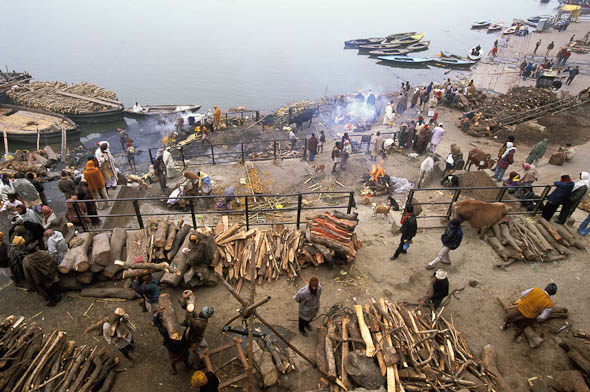
A general view of the mass cremation of those who died from the coronavirus disease (COVID-19) at a crematorium in New Delhi, India April 26, 2021. REUTERS/Adnan Abidi
Singh did not say during the meeting whether he warned the government directly of the need for action at that time. Singh declined to comment to Reuters.
Singh told the April 19 gathering that more recently, he had relayed the urgency of the matter to government officials.
"It was highlighted very, very clearly that unless drastic measures are taken now, it will be too late to prevent the mortality which we are going to see," said Singh, referring to a meeting which took place on April 18. He did not identify which government officials were in the meeting or describe their seniority.
Singh said some government officials in the meeting worried that mid-sized towns could see law and order problems as essential medical supplies like oxygen ran out, a scenario that has already begun to play out in parts of India.
The need for urgent action was also expressed the week before by the National Task Force for COVID-19, a group of 21 experts and government officials set up last April to provide scientific and technical guidance to the health ministry on the pandemic. It is chaired by V.K. Paul, Modi’s top coronavirus adviser.
The group had a discussion on April 15 and “unanimously agreed that the situation is serious and that we should not hesitate in imposing lockdowns,” said one scientist who took part.
Paul was present at the discussion, according to the scientist. Reuters could not determine if Paul relayed the group’s conclusion to Modi. Paul did not respond to a request for comment from Reuters.
Two days after Singh’s April 18 warning to government officials, Modi addressed the nation on April 20, arguing against lockdowns. He said a lockdown should be the last resort in fighting the virus. India’s two-month-long national lockdown a year ago put millions out of work and devastated the economy.
“We have to save the country from lockdowns. I would also request the states to use lockdowns as the last option,” Modi said. “We have to try our best to avoid lockdowns and focus on micro-containment zones,” he said, referring to small, localised lockdowns imposed by authorities to control outbreaks.
India’s state governments have wide latitude in setting health policy for their regions, and some have acted independently to try to control the spread of the virus.
Maharashtra, the country’s second-most populous state, which includes Mumbai, imposed tough restrictions such as office and store closures early in April as hospitals ran out of beds, oxygen and medicines. It imposed a full lockdown on April 14.
‘TICKING TIME BOMB’
The Indian variant has now reached at least 17 countries including Britain, Switzerland and Iran, leading several governments to close their borders to people travelling from India.
The World Health Organization has not declared the India mutant a "variant of concern," as it has done for variants first detected in Britain, Brazil, and South Africa. But the WHO said on April 27 that its early modelling, based on genome sequencing, suggested that B.1.617 had a higher growth rate than other variants circulating in India.
The UK variant, called B.1.1.7, was also detected in India by January, including in the northern state of Punjab, a major epicentre for the farmers’ protests, Anurag Agrawal, a senior INSACOG scientist, told Reuters.
The NCDC and some INSACOG laboratories determined that a massive spike in cases in Punjab was caused by the UK variant, according to a statement issued by Punjab’s state government on March 23.
Punjab imposed a lockdown from March 23. But thousands of farmers from the state remained at protest camps on the outskirts of Delhi, many moving back and forth between the two places before the restrictions began.
"It was a ticking time bomb," said Agrawal, who is director of the Institute of Genomics and Integrative Biology, which has studied some samples from Punjab. "It was a matter of an explosion, and public gatherings is a huge problem in a time of pandemic. And B.1.1.7 is a really bad variant in terms of spreading potential."
By April 7, more than two weeks after Punjab’s announcement on the UK variant, cases of coronavirus began rising sharply in Delhi. Within days, hospital beds, critical care facilities, and medical oxygen began running out in the city. At some hospitals, patients died gasping for air before they could be treated. The city’s crematoriums overflowed with dead bodies.
Delhi is now suffering one of the worst infection rates in the country, with more than three out of every 10 tests positive for the virus.
India overall has reported more than 300,000 infections a day for the past nine days, the worst streak anywhere in the world since the pandemic began. Deaths have surged, too, with the total exceeding 200,000 this week.
Agrawal and two other senior government scientists told Reuters that federal health authorities and local Delhi officials should have been better prepared after seeing what the variants had done in Maharashtra and Punjab. Reuters could not determine what specific warnings were issued to whom about preparing for a huge surge.
“We are in a very grave situation,” said Shanta Dutta, a medical research scientist at the state-run National Institute of Cholera and Enteric Diseases. “People listen to politicians more than scientists.”
Rakesh Mishra, director of the Centre for Cellular and Molecular Biology, which is part of INSACOG, said the country’s scientific community was dejected.
“We could have done better, our science could have been given more significance,” he told Reuters. “What we observed in whatever little way, that should have been used better.”
China launches main part of its 1st permanent space station
- Details
- Written by northsouth
- Category: Asia
- Hits: 1112
By SAM McNEIL
BEIJING — China on Thursday launched the main module of its first permanent space station that will host astronauts long term, the latest success for a program that has realized a number of its growing ambitions in recent years.
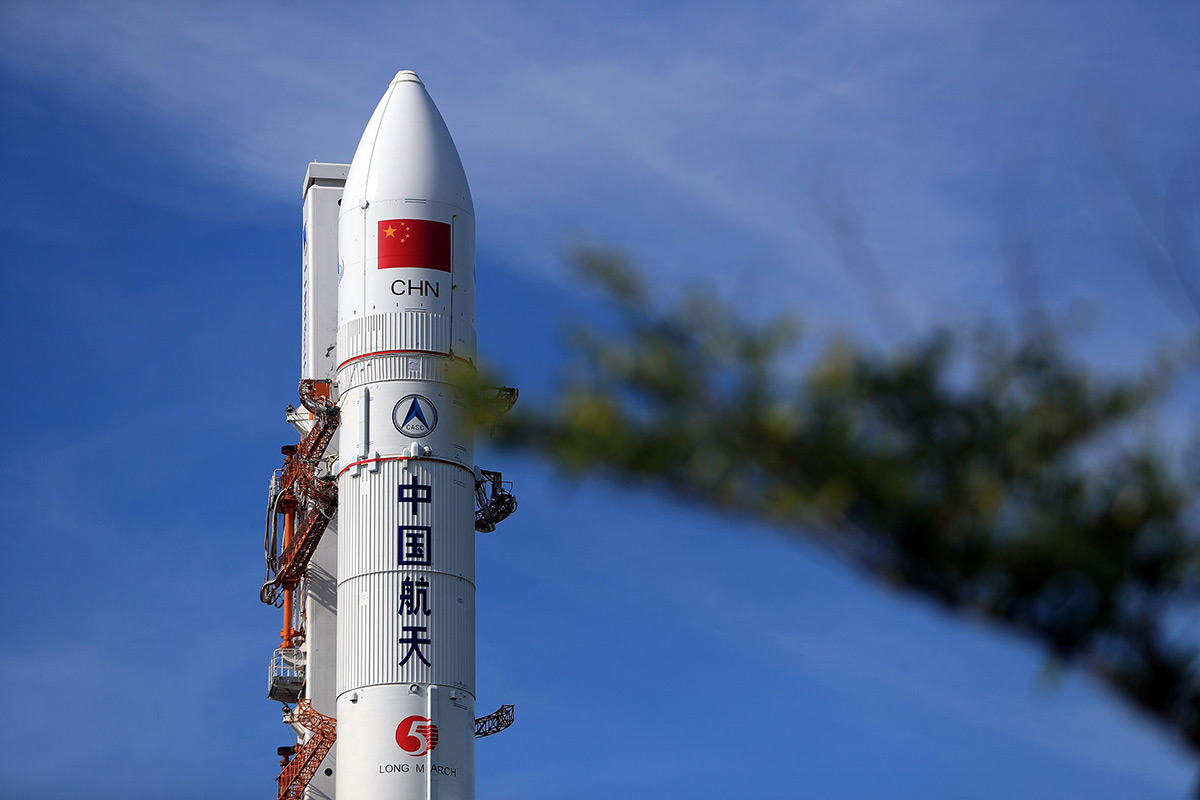
The Tianhe, or “Heavenly Harmony,” module blasted into space atop a Long March 5B rocket from the Wenchang Launch Center on the southern island province of Hainan, marking another major advance for the country’s space exploration.
The launch begins the first of 11 missions necessary to complete, supply and crew the station by the end of next year.
China’s space program has also recently brought back the first new lunar samples in more than 40 years and expects to land a probe and rover on the surface of Mars later next month.
Minutes after the launch, the fairing opened to expose the Tianhe atop the core stage of the rocket, with the characters for “China Manned Space” emblazoned on its exterior. Soon after, it separated from the rocket, which will orbit for about a week before falling to Earth, and minutes after that, opened its solar arrays to provide a steady energy source.
The space program is a source of huge national pride, and Premier Li Keqiang and other top civilian and military leaders watched the launch live from the control center in Beijing. A message of congratulations from state leader and head of the ruling Communist Party Xi Jinping was also read to staff at the Wenchang Launch Center.
The launch furthers the “three-step” strategy of building up China’s manned space program and marks “an important leading project for constructing a powerful country in science and technology and aerospace,” Xi’s message said.
The core module is the section of the station where astronauts will live for up to six months at a time. Another 10 launches will send up two more modules where crews will conduct experiments, four cargo supply shipments and four missions with crews.
At least 12 astronauts are training to fly to and live in the station, including veterans of previous flights, newcomers and women, with the first crewed mission, Shenzhou-12, expected to be launched by June.
When completed by late 2022, the T-shaped Chinese Space Station is expected to weigh about 66 tons, considerably smaller than the International Space Station, which launched its first module in 1998 and will weigh about 450 tons when completed.
Tianhe will have a docking port and will also be able to connect with a powerful Chinese space satellite. Theoretically, it could be expanded to as many as six modules. The station is designed to operate for at least 10 years.
Tianhe is about the size of the American Skylab space station of the 1970s and the former Soviet/Russian Mir, which operated for more than 14 years after launching in 1986.
The core module will provide living space for as many as six astronauts during crew changeovers, while its other two modules, Wentian, or “Quest for the Heavens,” and Mengtian, or “Dreaming of the Heavens,” will provide room for conducting scientific experiments including in medicine and the properties of the outer space environment.
China began working on a space station project in 1992, just as its space ambitions were taking shape. The need to go it alone became more urgent after was excluded from the International Space Station largely due to U.S. objections over the Chinese program’s secretive nature and close military ties.
After years of successful rocket and commercial satellite launches, China put its first astronaut into space in October 2003, becoming only the third country to independently do so after the former Soviet Union and the United States.
Along with more crewed missions, China launched a pair of experimental, single-module space stations — Tiangong-1, which means “Heavenly Palace-1,” and its successor, Tiangong-2. The first burned up after contact was lost and its orbit decayed, while the second was successfully taken out of orbit in 2018.
The Tiangong-2 crew stayed aboard for 33 days.
While NASA must get permission from a reluctant Congress to engage in contact with the Chinese space program, other countries have been far less reluctant. European nations and the United Nations are expected to cooperate on experiments to be done on the completed Chinese station.
The launch comes as China is also forging ahead with crewless missions, particularly in lunar exploration, and it has landed a rover on the little-explored far side of the moon. In December, its Chang’e 5 probe returned lunar rocks to Earth for the first time since the U.S. missions of the 1970s.
Meanwhile, a Chinese probe carrying a rover is due to set down on Mars sometime around the middle of next month, making China only the second country to successfully accomplish that after the U.S.
The Tianwen-1 space probe has been orbiting the red planet since February while collecting data. Its Zhurong rover will be looking for evidence of life.
Another Chinese program aims to collect soil from an asteroid, a key focus of Japan’s space program.
China plans another mission in 2024 to bring back lunar samples and has said it wants to land people on the moon and possibly build a scientific base there. No timeline has been proposed for such projects. A highly secretive space plane is also reportedly under development.
China has proceeded in a more measured, cautious manner than the U.S. and Soviet Union during the height of the space race.
One recent setback came when a Long March 5 rocket failed in 2017 during development of the Long March 5B variant used to put Tianhe into orbit, but that caused only a brief delay.
Main News
Error: No articles to display
latest news
- New blood test can spot breast cancer at earliest stages, scientists
- Sole bidders Saudi Arabia confirmed as hosts of 2034 men’s World Cup
- Nagasaki survivor accepts Nobel Peace Prize, calls for nuclear free world
- Countering Collapse in Haiti
- Crude oil price and production movements, OPEC
- IFAD, Nepal launch $120 million programme to help over 250,000 people
- DiEM25 challenges EU’s inhumane practices towards migrants
- Malibu wildfires forced thousands to evacuate their homes
- DRC: Senior army officials must be investigated for possible crimes
- Netanyahu describes corruption charges against him as ‘ocean of absurdity’ at trial
- Authorities disrupt migrant smuggling supply chain
- Israeli tanks '16 miles from Damascus' as overnight raids 'destroy Assad army's assets'
- In Haiti, women suffer the consequences of gang violence
- ICC arrest warrants for top Israeli officials are step toward justice
- Poland: Brutal Pushbacks at Belarus Border
- Sudan: War Crimes in South Cordovan, HRW
- Europeans politicians quick to promote hate against Syrian refugees
- Pentagon announces $988 million Ukraine Security Assistance package
- Trump says Russia, Iran in 'weakened state,' calls on Putin to make Ukraine deal
- $1.7 billion in airline funds blocked by governments
- 12 Ways to improve circulation for healthy blood flow, Doctors
- Action against ‘phone phishing’ gang in Belgium, Netherlands: 8 arrests
- $282 million program targeting agriculture and food systems
- What’s happening in Syria? The key developments as Assad flees to Russia
- UK nearly as divided as the US, report finds
Europe
DiEM25 challenges EU’s inhumane practices towards migrants
Authorities disrupt migrant smuggling supply chain
ICC arrest warrants for top Israeli officials are step toward justice
Poland: Brutal Pushbacks at Belarus Border
Europeans politicians quick to promote hate against Syrian refugees
Action against ‘phone phishing’ gang in Belgium, Netherlands: 8 arrests
UK nearly as divided as the US, report finds
Starmer rejects choice between EU and US allies
French government at risk of collapsing over 2025 budget
Belgium convicted of crimes against humanity for acts committed during colonisation
23rd International Economic Forum on Africa Monday 9 December
Putin Approves New Budget With Record Defence Spending
UK MPs back Assisted dying bill after emotionally-charged Commons debate
Ireland goes to polls with three parties neck and neck
Putin full of praise for ‘intelligent and experienced’ Trump
UK to continue selling arms to Israel despite Lebanon ceasefire, Starmer says
Crackdown on illegal streaming network with 22 million users worldwide
France says Israel's Netanyahu has immunity from ICC arrest warrant
Number of Europeans diagnosed with HIV rose in 2023 with new cases in most countries
Georgian prime minister suspends EU membership talks until end of 2028
Russian missile fired at Ukraine carried warheads without explosives
Russia advances in Ukraine at fastest monthly pace since start of war
Why are news outlets not covering crackdown on pro-Palestinian journalists in UK?
Starmer and Lammy are ‘monstrous war criminals’, Palestinian lawyer
Storm Bert brings severe flooding across UK
Asia
Nagasaki survivor accepts Nobel Peace Prize, calls for nuclear free world
IFAD, Nepal launch $120 million programme to help over 250,000 people
Embezzling property tycoon scrambles to raise $9bn to avoid death sentence
Pakistan: Everything we know about clashes between Imran Khan supporters and police
India: Mosque survey dispute erupts into deadly clashes
Taliban detained journalists over 250 times since takeover, UN
Philippines summons VP Duterte over threat to have Marcos killed
Four troops killed in Pakistan as protesters demand release of ex-PM Khan
Thousands of Imran Khan supporters defy arrest to head to capital
Pakistan sealing off capital ahead of planned rally by Imran Khan supporters
Fighting between armed sectarian groups in Pakistan kills at least 33 people
Rise in Afghan opium cultivation reflects economic hardship
Volcano erupts in Bali spewing five-mile ash cloud
New Delhi becomes world’s most polluted city as AQI levels reach 1,000
Pakistan’s toxic smog cover is now visible from space
Chinese driver 'angry about divorce settlement' ploughs into crowd leaving 35 dead
Taliban to attend UN climate conference for first time
Suicide bomber kills 24 in explosion at Pakistan train station
China unveils new heavy rocket that looks similar to SpaceX Starship
North Korea’s new ICBM missile records longest flight time yet
Japanese youth committed to fight poverty and hunger with IFAD
Japan's government in flux after election gives no party majority
Indan Muslims face discrimination after restaurants forced to display workers’ names
IFAD and Thailand sign agreement for new regional office in Bangkok
Nobel Peace Prize was awarded to the Japanese organization Nihon Hidankyo
Africa
DRC: Senior army officials must be investigated for possible crimes
Sudan: War Crimes in South Cordovan, HRW
Angola: US President Biden must demand immediate release of five critics
Wife of 'abducted' Ugandan opposition figure says he won't get justice
S.Africa opposition seeks to revive impeachment proceedings against Ramaphosa
Namibia may elect its first-ever female president in elections this week
Botswana turns to cannabis as diamonds are’s for ever
Influencers and social media beat mainstream media in Kenya
Mali’s ruling military appoints new prime minister
Regenerative Agriculture and Peace-building in South-central Somalia
Wits University unveils pan-African AI centre
'The UK will never forget Sudan,' says David Lammy
Sudan’s displaced have endured ‘unimaginable suffering, brutal atrocities’
Nearly half the world’s 1.1 billion poor live in conflict settings
Sudan war deaths are likely much higher than recorded
Africa’s mineral deposits can power the energy transition
The joint force of the AES ready to launch large-scale operations to secure Sahel
Mystery still surrounds death of revered UN chief Hammarskjöld, 63 years after plane crash
IFAD and Sierra Leone partner to boost farm productivity
Mozambique: End violent post-election crackdown ahead of 7 November Maputo march
Africa: Richer countries must commit to pay at COP29
Sudan’s ‘living nightmare’ continues as 11 million flee war
‘Alarming’ situation in Great Lakes Region of DR Congo
Climate change worsened rains in flood-hit African regions, scientists
African progress backslides as coups and war persist
Americas
Countering Collapse in Haiti
Malibu wildfires forced thousands to evacuate their homes
In Haiti, women suffer the consequences of gang violence
Pentagon announces $988 million Ukraine Security Assistance package
Trump says Russia, Iran in 'weakened state,' calls on Putin to make Ukraine deal
Musk dealt legal defeat in battle over $56 billion Tesla pay deal
Autonomous Systems Impact on Modern Warfare
US, Israel, China, and the Shifting Arms Trade in the Middle East
Support the Court, HRW
Private prisons in US stand to cash in from Trump’s mass deportation plan
G7 Foreign Ministers’ Meeting Statement
War Crimes Weapons: Made in the USA
Trump Cabinet and executive branch of different ideas and eclectic personalities
Trump Says He Will Impose 25% Tariff on Canada and Mexico on Day one
Prosecutors drop election interference and documents cases against Trump
Number of children recruited by gangs in Haiti soars by 70%, UNICEF
Archaeologists discover 4,000-year-old canals used to fish by predecessors of ancient Maya
Democrats in Congress urge Biden to sanction Israelis over West Bank violence
Susan Sarandon opens up on exile from Hollywood after PRO-Palestine remarks
What could Trump’s election win mean for Ukraine and the Middle East
Trump deploys garbage truck to trash Biden gaffe at Wisconsin rally
US calls on Israel to tackle ‘catastrophic humanitarian crisis’ in Gaza
Vinicius's Ballon d’Or snub sparks fury in Brazil amid claims of racism
CNN guest thrown off air after telling Mehdi Hasan:‘I hope your beeper doesn’t go off’
Pentagon warns North Korea as 10,000 troops set to join Russia’s war
Australia & Pacific
Australia passes world-first ban on social media for under 16s into law
New Zealanders save over 30 stranded whales by lifting them on sheets
Commonwealth leaders say 'time has come' for discussion on slavery reparations
Generational export reforms to boost AUKUS trade and collaboration
Australia lawmaker calls opposition leader racist over opposition to Gaza refugees
Agreement strengthens AUKUS submarine partnership
Passionate welcome for WikiLeaks founder Assange as he lands in Australia
Violent protests return to New Caledonia as pro-independence leader extradited
EU and Australia accelerate their digital cooperation
Over 2,000 people thought to have been buried alive in Papua New Guinea landslide
Over 670 people died in a massive Papua New Guinea landslide, UN
Macron says extra security to stay in riot-hit New Caledonia as long as needed
New Caledonia riots: Tourists evacuated, President Macron to visit
Hundreds more French police start deploying to secure New Caledonia
France declares state of emergency in New Caledonia as protests rage
Australia’s 2024 National Defence Strategy
Sydney rocked by second mass stabbing as knifeman attacks bishop
Three dead, 1,000 homes destroyed in Papua New Guinea quake
Australia and UK sign defense and security treaty
Australia tightens student visa rules as migration hits record high
Global food crisis and the effects of climate change need urgent action, IFAD
Indonesia, Australia to sign defence pact within months
Australia to ban doxxing after pro-Palestinians publish information about hundreds of Jews
Australia launches inquiry into why Cabinet documents relating to Iraq war remain secret
Australia says AI will help track Chinese submarines under new Aukus plan
MENA
Netanyahu describes corruption charges against him as ‘ocean of absurdity’ at trial
Israeli tanks '16 miles from Damascus' as overnight raids 'destroy Assad army's assets'
What’s happening in Syria? The key developments as Assad flees to Russia
Who is Abu Mohammed al-Golani, leader of insurgency that toppled Syria’s Assad?
Syrian leader Bashar Assad in Moscow, State news agency
IFAD and Kuwait agree to strengthen efforts to support small-scale farmers
Israel responds to Hezbollah rocket attack with airstrikes on south Lebanon
Egypt: Education Restricted for Refugee
At least 25 killed in counter air strikes by Syrian army on rebels in north-west
UNRWA suspends aid delivery to Gaza after lorries looted at gunpoint
Who are the Syrian rebels HTS and why are they advancing?
Syrian rebels capture centre of Aleppo in major blow to Assad regime
World Central Kitchen stops work in Gaza after three aid workers killed by Israeli strike
Lebanon must elect president during 60-day truce with Israel as part of ceasefire
Abbas clarifies PA presidency succession plan but experts unconvinced
At least 10 killed in Israeli air strike on Beit Lahia
UN calls for accountability and investigations in Israel-Hezbollah conflict
Saudi Arabia approves 2025 budget with estimated $315bn
Lebanon faces $25bn reconstruction bill after Israel-Hezbollah ceasefire
Israeli military to remain in Gaza for years, food minister says
Israeli government orders officials to boycott left-leaning paper Haaretz
In East Jerusalem, record number of homes destroyed to drive out Palestinian residents
Biden: Israel and Hezbollah Ceasefire deal can be blueprint to end Gaza war
Heavy rain and high waves wash away tents of Gaza's displaced
Saudi NEOM gigaproject a 'generational investment,' minister
Banners



Videos
-
Future of car-plane, see it to believe it
https://www.youtube.com/watch?v=D4uSWtazRCM
-
Mehdi Hasan: Islam is a peaceful religion
https://www.youtube.com/watch?v=Jy9tNyp03M0 -
Python swallows antelope whole in under an hour
https://www.youtube.com/watch?v=x0rk5zh7RaE
-
Sangoku dance
http://www.youtube.com/watch?v=Df1SkeiPEAo -
flying 3 kites wonder!
https://www.youtube.com/watch?v=nr9KrqN_lIg
-
Korea has talent
http://www.youtube.com/watch?v=tZ46Ot4_lLo&feature=related -
Paul Potts sings Nessun Dorma
http://www.youtube.com/watch?v=1k08yxu57NA
-
Susan Boyle - Britain's Got Talent
http://www.youtube.com/watch?v=RxPZh4AnWyk -
Twist and Pulse - Britain's Got Talent
http://www.youtube.com/watch?v=1RDiBxbT_CA -
Shaheen Jafargholi (HQ) Britain's Got Talent
http://www.youtube.com/watch?v=VYDM3MIzEHo
High-Quality clip of 12-year-old singer Shaheen Jafargholi auditioning on Britain's Got Talent 2009. First he sings Valerie by The Zutons, as performed by Amy Winehouse, but, after Simon interrupts him and asks for a different song, he just blew everyone away. -
David Calvo juggles and solves Rubik's Cubes
http://www.youtube.com/watch?v=lhkzgjOKeLs
-
Outdoor 'bubble pod' hotel unveiled
http://www.youtube.com/watch?v=9IPBKlWf-cA