
Home
Assange suffered 'mini-stroke' in prison: fiancee
- Details
- Written by northsouth
- Category: Europe
- Hits: 760
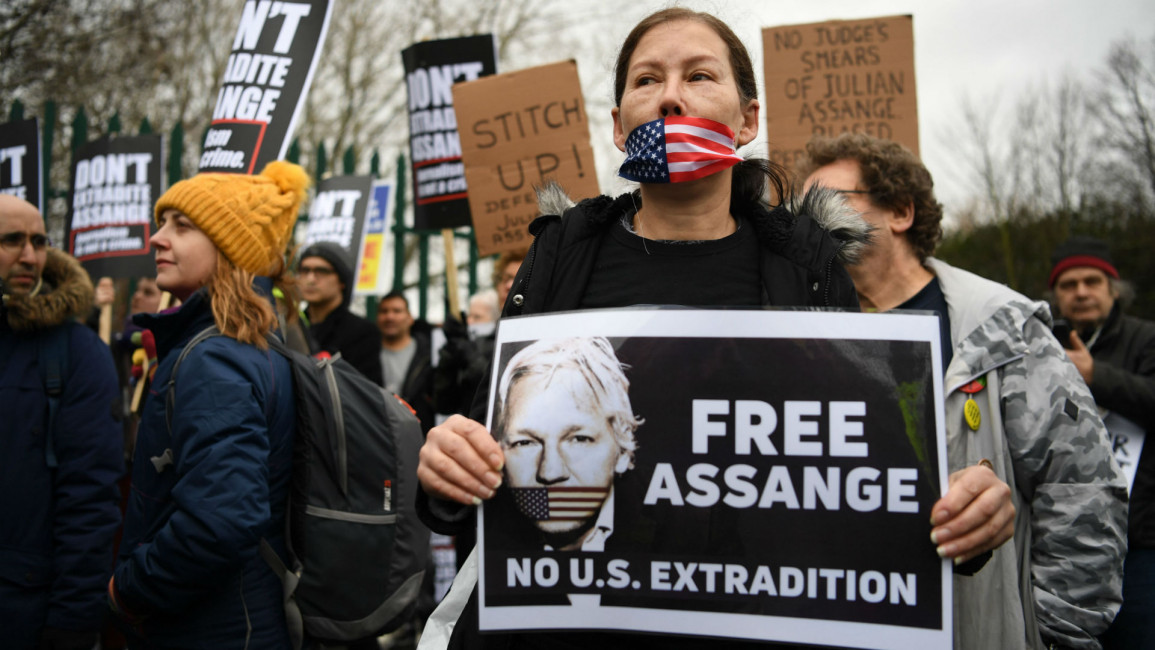
LONDON - WikiLeaks publisher Julian Assange had a mini-stroke during his battle to avoid extradition from Britain to the United States, his fiancee Stella Moris said.
Moris, the mother of Assange's two young children, said it happened in late October on the first day of a US government appeal against a ruling blocking his removal.
"He needs to be freed. Now," she tweeted late on Saturday.
The Mail on Sunday newspaper said it was a transient ischaemic attack, in which the blood supply to part of the brain is temporarily interrupted.
It left Assange, 50, with a drooping right eyelid, memory loss and signs of neurological damage, and he was now taking medication, the weekly said.
Moris was quoted as saying she was concerned it could lead to a more major stroke and raised fears about his ability to withstand the extradition process.
"I believe this constant chess game, battle after battle, the extreme stress, is what caused Julian's stroke on October 27," she added.
The United States wants to put Assange on trial for WikiLeaks' 2010 publication of thousands of top-secret military documents about the US wars in Afghanistan and Iraq.
His supporters' hopes were raised in January after a district judge in London blocked the extradition on the grounds that he was a suicide risk if transferred to US custody.
But they were dashed on Friday when two appeal judges overturned the decision after accepting US government assurances he would receive appropriate treatment and not be held in punishing isolation in custody.
Assange's lawyers say they will take the case to the Supreme Court.
His lawyers have previously raised concerns about the effects of his lengthy incarceration on his physical and mental health in a bid to halt the extradition.
Assange spent seven years in Ecuador's London embassy until 2019 after jumping bail in connection with sexual assault allegations in Sweden.
He was then jailed for 50 weeks for breaching bail in that case, which was later dropped, but detained ever since on the grounds he was a flight risk.
End of an era: Germany’s Merkel bows out after 16 years
- Details
- Written by northsouth
- Category: Europe
- Hits: 806
By GEIR MOULSON
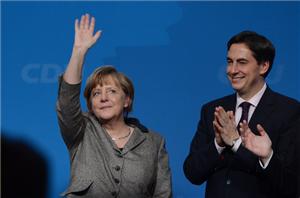
BERLIN - Angela Merkel was assured of a place in the history books as soon as she became Germany’s first female chancellor on Nov. 22, 2005.
Over the next 16 years, she was credited with raising Germany’s profile and influence, working to hold a fractious European Union together, managing a string of crises and being a role model for women.
Now that near-record tenure is ending with her leaving office at age 67 to praise from abroad and enduring popularity at home. Her designated successor, Olaf Scholz, is expected to take office Wednesday.
Merkel, a former scientist who grew up in communist East Germany, is bowing out about a week short of the record for longevity held by her one-time mentor, Helmut Kohl, who reunited Germany during his 1982-1998 tenure.
ADVERTISEMENT
While Merkel perhaps lacks a spectacular signature achievement, the center-right Christian Democrat came to be viewed as an indispensable crisis manager and defender of Western values in turbulent times.
She served alongside four U.S. presidents, four French presidents, five British prime ministers and eight Italian premiers. Her chancellorship was marked by four major challenges: the global financial crisis, Europe’s debt crisis, the 2015-16 influx of refugees to Europe and the coronavirus pandemic.
“It’s undeniable that she’s given Germany a lot of soft power,” said Sudha David-Wilp, the deputy director of the German Marshall Fund of the United States’ Berlin office. “Undoubtedly she’s elevated Germany’s image in the world.”
“When she first came onto the scene in 2005, a lot of people underestimated her, but she grew in stature along with Germany’s role in the world,” David-Wilp added. Others in Europe and beyond “want more of an active Germany to play a role in the world — that may not have been the case before she was in office, necessarily.”
In a video message at Merkel’s final EU summit in October, former U.S. President Barack Obama thanked her for “taking the high ground for so many years.”
“Thanks to you, the center has held through many storms,” he said.
Merkel was a driving force behind EU sanctions against Russia over its annexation of Crimea and backing of separatists in eastern Ukraine, and also spearheaded so-far-unfinished efforts to bring about a diplomatic solution there. She was regarded as being “able to have a dialogue with (Russian President Vladimir) Putin on behalf of the West,” David-Wilp said.
She was steadfast in pursuing multilateral solutions to the world’s problems, a principle she set out at a military parade in her honor last week.
The global financial crisis and the migrant influx “made clear how much we depend on cooperation beyond national borders and how indispensable international institutions and multilateral instruments are to be able to cope with the big challenges of our time,” Merkel said, identifying those as climate change, digitization and migration.
That stance was a strong counterpoint to former U.S. President Donald Trump, with whom she had a difficult relationship. At their first meeting in the White House in March 2017, when photographers shouted for them to shake hands, she quietly asked Trump “do you want to have a handshake?” but there was no response from the president, who looked ahead.
Merkel dismissed being labeled as “leader of the free world” during that period, saying leadership is never up to one person or country.
Still, she was viewed as a crucial leader in the unwieldy 27-nation EU, famed for her stamina in coaxing agreements in marathon negotiating sessions.
“Ms. Merkel was a compromise machine,” Luxembourg Prime Minister Xavier Bettel said recently. When negotiations were blocked, she “mostly found something that unites us to move things along.”
That was on display in July 2020, when EU leaders clinched a deal on an unprecedented 1.8 trillion-euro ($2 trillion) budget and coronavirus recovery fund after a quarrelsome four-day summit.
At her 107th and last EU summit, European Council President Charles Michel told Merkel: “You are a monument.” A summit without her would be like “Rome without the Vatican or Paris without the Eiffel Tower,” he added.
The appreciation from her counterparts was genuine, although there was plenty of friction over the years. Merkel always sought to keep the EU as tightly knit as possible but strongly defended Germany’s interests, clashing with Greece during the debt crisis and disagreeing with Hungary, Poland and others over their refusal — unlike Germany — to host migrants arriving in Europe.
Merkel said she was bowing out of the EU “in a situation that definitely gives me cause for concern as well.”
“We have been able to overcome many crises in a spirit of respect, in an effort always to find common solutions” she said. “But we also have a series of unresolved problems, and there are big unfinished tasks for my successor.”
That’s also true at home, where her record — dominated by the crises she addressed and including a pandemic that is flaring anew as she steps down — is a mixed bag. She leaves Germany with lower unemployment and healthier finances, but also with well-documented shortcomings in digitization — many health offices resorted to fax machines to transmit data in the pandemic — and what critics say was a lack of investment in infrastructure.
She made progress in promoting renewable energy, but also drew criticism for moving too slowly on climate change. After announcing in 2018 that she wouldn’t seek a fifth term, she failed to secure a smooth transition of power in her own party, which slumped to defeat in Germany’s September election.
The incoming governing coalition under Scholz says it wants to “venture more progress” for Germany after years of stagnation.
But Germans’ overall verdict appears to remain favorable. During the election campaign, from which she largely was absent, Merkel’s popularity ratings outstripped those of her three would-be successors. Unlike her seven predecessors in postwar Germany, she is leaving office at a time of her choosing.
Merkel’s body language and facial expressions sometimes offered a glimpse of her reactions that went beyond words. She once lamented that she couldn’t put on a poker face: “I’ve given up. I can’t do it.”
She wasn’t intimidated by Putin’s style. The Russian president once brought his Labrador to a 2007 meeting with Merkel, who later said she had a “certain concern” about dogs after having once been bitten by one.
She was never the most glamorous of political operators, but that was part of her appeal – the chancellor continued to take unglamorous walking holidays, was occasionally seen shopping at the supermarket and lived in the same Berlin apartment as she did before taking the top job.
Named “The World’s Most Powerful Woman” by Forbes magazine for the past 10 years in a row, Merkel steps down with a legacy of breaking through the glass ceiling of male dominance in politics — although she also has faced criticism for not pushing harder for more gender equality.
Obama said that “so many people, girls and boys, men and women, have had a role model who they could look up to through challenging times.”
Former President George W. Bush, whose relationship with Merkel’s predecessor, Gerhard Schroeder, soured over the latter’s opposition to the U.S.-led war in Iraq, said that “Angela came in and changed that completely.”
“Angela Merkel brought class and dignity to a very important position and made very hard decisions ... and did so based upon principle,” Bush told German broadcaster Deutsche Welle in July. He described her as “a compassionate leader, a woman who was not afraid to lead.”
Video shows French patrol car watching migrants cross Channel
- Details
- Written by northsouth
- Category: Europe
- Hits: 766
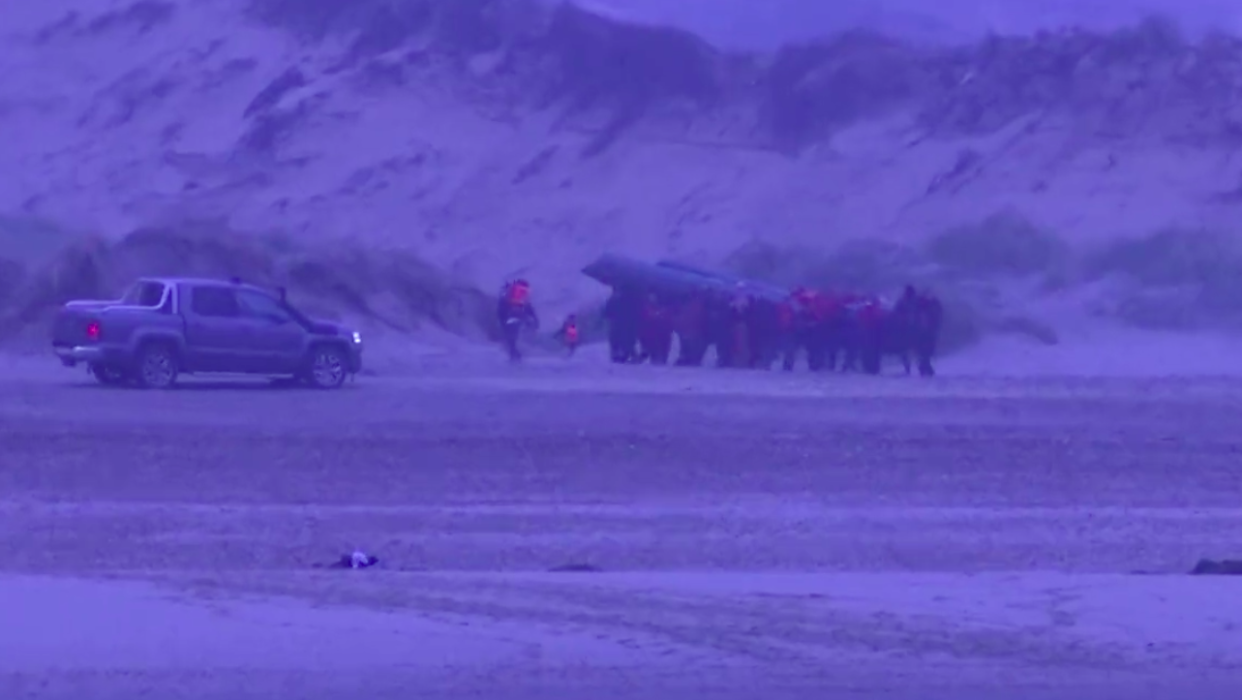
LONDON - Footage of French police watching a dinghy of migrants leave for the UK on the day of the Channel crossing tragedy has received widespread condemnation.
The French regional maritime authority said 27 people died after a migrant boat capsized on Wednesday, prompting Boris Johnson to hold an emergency Cobra meeting to discuss the issue of Channel crossings.
A clip showing French police standing and watching as people got in a boat and started their journey across the Channel was criticised as “disgraceful”.
The footage, captured by journalists from Reuters, shows a group of more than 40 migrants attempting a crossing in Wimereux, around 30 km from Calais.
The group, which included six children, are seen hauling a rubber dinghy into the water at daybreak on Wednesday. A French police vehicle flashes its lights at them to stop, before later leaving the area to continue its patrol further along the beach.
Dover MP Natalie Elphicke told BBC Breakfast: “Yesterday we saw footage of French police standing by while people got the boat ready, picked up the engine and took to the water on the French side.
“They did absolutely nothing. That’s unacceptable and that’s got to change.”
Elphicke said the British “are standing by willing to put people to help” and described the issue of Channel crossings as “a humanitarian crisis on the shores of France”.
She added: “These people smugglers must not be allowed to continue to ply their trade and put people’s lives at risk in these wintry seas
“It is vital that action’s taken and the only way to do that is to stop people on the beaches of France from getting into the boats and turning them around quickly in French waters.”
Zoe Gardner, from the Joint Council of Welfare for Immigrants, criticised French police – but unlike Elphicke, she did not call on the crossings to be stopped altogether.
Instead, Gardner said police in the video should not have allowed migrants to make the crossing on “unsafe vessels”, and called for authorities to “offer people alternatives” to the smuggling boats.
She said: “The French are patrolling their own borders insufficiently, it’s absolutely horrendous, those images of the French police standing by while children got onto one of those unsafe vessels are shocking to me.”
Gardner said the tragedy was “completely predictable” and “completely preventable”.
She added: “This has to be a time for our government to mark a turning point, this tragedy must not be allowed to continue and that means changing our approach, not more of the same failed policies.
“We need to offer people alternatives to the smuggling boats.”
Boris Johnson on Wednesday called on France to agree to joint police patrols along the French Channel coast – but French politicians pointed the finger at UK authorities for failing to tackle the issue.
Pierre-Henri Dumont, the MP for Calais, rejected the prime minister’s proposal as a “crazy solution” that “will not change anything” along the vast shoreline.
Mayor of Calais Natacha Bouchart said it is the British who are to blame for the tragedy and called on Johnson to “face up to his responsibilities”.
Franck Dhersin, vice president of transport for the northern Hauts-de-France region, said the “mafia chiefs” at the top of the trafficking networks live in the UK and must be arrested.
“And the mafia chiefs live in London… They live in London peacefully, in beautiful villas, they earn hundreds of millions of euros every year, and they reinvest that money in the City,” he told French TV station BFMTV.
But Bruno Bonnell, an MP representing president Emmanuel Macron’s En Marche! party in France, said he would not be opposed to the UK helping to police the French border – as long as it wasn’t politicised by the UK.
Asked whether Macron would allow British police officers on to French soil to help tackle the flow of migrant crossings, Bonnell told BBC Radio 4’s Today programme: “As long as it is really a common operation and not a way to twist information once more, pretending that the French people are turning their eyes off those long boat departures.
“I think that is something that could probably help the situation, and I would support that.”
What Facebook whistleblower reveals about social media and conflict
- Details
- Written by northsouth
- Category: Europe
- Hits: 769
By Jane Esberg, Senior Analyst, Social Media & Conflict, International Crisis Group, 18 November 2021
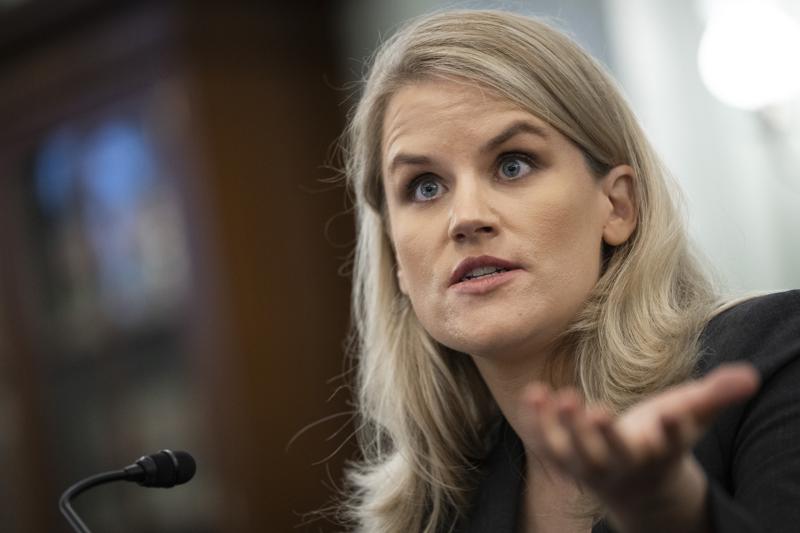
BRUSSELS - Former Facebook employee Frances Haugen’s recent testimony before the U.S. Senate reasserted the platform’s role in propagating misinformation that feeds conflict offline. Facebook should do more to reduce the spread of harmful content by revamping its moderation capacities and modifying its algorithm.
The U.S. Senate recently heard testimony from Facebook whistleblower Frances Haugen, who left the company’s civic integrity team with a trove of documents that she delivered to the Wall Street Journal. The leaked documents and her testimony support what many, including Crisis Group, have reported – that Facebook has exacerbated conflict in a number of places, and too often does not do enough to manage the fallout.
Haugen’s central criticisms in her testimony focus on Facebook’s algorithm, the particular set of rules that determine the content that users see, including where a post appears in the “news feed”. Facebook’s algorithm is designed to give users what the company believes is the best possible experience, to keep them coming back to the platform. Though few specifics are known, among other metrics the algorithm heavily weights user engagement, which includes actions like “liking”, sharing or commenting on a post. Problems arise because polarising content tends to perform well on such metrics, and thus get rewarded with a higher position on users’ feeds. This affects the substance of the content itself: in leaked Facebook research, some European political parties reported posting more negative content in response to a 2018 change to the algorithm that more heavily weighed user engagement. Facebook tries to mitigate this risk through what it calls “integrity demotions”, which push potentially harmful content lower on the news feed, and by boosting original reporting. For Haugen and other critics, these measures are not enough.
The debate over Facebook’s news feed algorithm has direct implications for conflict. Crisis Group’s work on Cameroon highlighted that by promoting polarising content, the algorithm may contribute to ethno-political tensions. Hate speech and other polarising content often spread on social media in Ethiopia, and Haugen has suggested that the algorithm may contribute to its reach. In an internal Facebook report leaked to the Wall Street Journal, a test set up to explore how the news feed operated in India found a “near constant barrage of polarizing nationalist content, misinformation, and violence”.
Conflict zones present particular challenges to Facebook in reducing harmful content: understanding what constitutes misinformation is more difficult in regions with less media freedom; hate speech is often highly contextual; and the plethora of languages and dialects spoken by users make content moderation across the globe an enormous technical challenge.
But even with these challenges, Facebook can do better. Start with its moderation system. Harmful material is removed through a mix of human moderators, who review flagged posts, and artificial intelligence, including a hate speech algorithm. Though 90 per cent of Facebook’s users live outside the U.S. and Canada, the moderation system heavily favours the U.S. According to leaked Facebook research, only 13 per cent of the 3.2 million hours spent labelling and removing misinformation in 2020 focused on non-U.S. contexts.
Facebook also has significant gaps in its language capacities. Haugen reported that 87 per cent of the platform’s spending to counter misinformation is devoted to English speakers, despite representing just 9 per cent of users. Most of the platform’s Arabic-speaking content reviewers know Moroccan Arabic, for example, and so cannot always identify hate speech, violence and abuse in other regional dialects, according to a leaked Facebook document. As Crisis Group has noted, in Cameroon, moderators with an understanding of local dialects are important to correctly identifying inflammatory content. Many conflict-affected countries, particularly those with multiple languages and dialects, are left under-resourced.
The same language capacity issues arise in Facebook’s automated flagging of content. Facebook’s response to harmful language relies heavily on its hate speech algorithm, which it touts as identifying 97 per cent of this content ultimately removed from the platform. But this algorithm does not work in all dialects, according to leaked research. It covers only two of the six languages spoken in Ethiopia, for example. In Afghanistan, the platform took action on an estimated .23 per cent of hate speech, according to Facebook research, due to gaps in its language capabilities. In India, Facebook’s largest market, leaked research highlighted a lack of relevant language classifiers to flag content. (Importantly, this may not be the only reason such content was allowed to remain: the Wall Street Journal previously reported that political considerations affected decisions about whether or not to remove Hindu nationalist pages and content.) One leaked study estimated that Facebook took action globally on as little as 3 to 5 per cent of hate speech and less than 1 per cent of violence incitement.
Facebook has taken some steps to address these imbalances. Partnerships with NGOs give the platform greater insight into conflict contexts. (Crisis Group is a partner of Facebook and in that capacity has occasionally been in contact with Facebook regarding misinformation on the platform that could provoke deadly violence.) Facebook has also provided digital literacy training to aid in reducing the spread of harmful content. Facebook’s spokesperson told the Wall Street Journal: “In countries at risk for conflict and violence, we have a comprehensive strategy, including relying on global teams with native speakers covering over 50 languages, educational resources, and partnerships with local experts and third-party fact checkers to keep people safe”. Such efforts are useful, and should be expanded.
Improving the platform’s ability to reduce harmful content across languages and local contexts is a central component of reducing the potential for violence offline. This includes channelling more funding toward expanding moderation teams and addressing language gaps, which can help limit the flow of hate speech, misinformation and incitement to violence. For example, Facebook increased the resources dedicated to Myanmar after it publicly acknowledged its role in the Rohingya atrocities. Crisis Group research shows that in part because of this past experience, the platform moved quickly and aggressively to remove pages linked to the military junta after the February 2021 coup.
But content moderation alone will not be enough. Haugen’s testimony lays bare how Facebook’s algorithm is in some cases misaligned with reducing conflict. Making the algorithm less engagement-driven would not directly address the presence of harmful content, but it could make it less visible. Nor does this have to mean shifting to a chronological news feed, as Haugen recommended: Facebook made changes to the algorithm in relation to health and civic content in the spring of 2020, and in certain conflict-affected countries including Myanmar and Ethiopia. Changes could also target the “explore” feature, which prompts users to look at new pages or accounts they may be interested in – one way that Facebook is inadvertently still advertising pages linked to Myanmar’s military junta. Fully understanding the consequences of any algorithmic changes, particularly in developing contexts, would be greatly facilitated by Facebook disclosing its own research and sharing more data with outside experts.
In the midst of all the criticism, it is easy to lose sight of the many positive benefits of social media for conflict-affected countries. Facebook has helped in the organisation of mass protest movements. It has allowed users to share information about human rights abuses in conflict zones. It offers an alternative source of news in countries where the media is heavily regulated by the state. But the downsides have been substantial. With more resources, research and reform, Facebook could reduce them.
Main News
Error: No articles to display
latest news
- New blood test can spot breast cancer at earliest stages, scientists
- Sole bidders Saudi Arabia confirmed as hosts of 2034 men’s World Cup
- Nagasaki survivor accepts Nobel Peace Prize, calls for nuclear free world
- Countering Collapse in Haiti
- Crude oil price and production movements, OPEC
- IFAD, Nepal launch $120 million programme to help over 250,000 people
- DiEM25 challenges EU’s inhumane practices towards migrants
- Malibu wildfires forced thousands to evacuate their homes
- DRC: Senior army officials must be investigated for possible crimes
- Netanyahu describes corruption charges against him as ‘ocean of absurdity’ at trial
- Authorities disrupt migrant smuggling supply chain
- Israeli tanks '16 miles from Damascus' as overnight raids 'destroy Assad army's assets'
- In Haiti, women suffer the consequences of gang violence
- ICC arrest warrants for top Israeli officials are step toward justice
- Poland: Brutal Pushbacks at Belarus Border
- Sudan: War Crimes in South Cordovan, HRW
- Europeans politicians quick to promote hate against Syrian refugees
- Pentagon announces $988 million Ukraine Security Assistance package
- Trump says Russia, Iran in 'weakened state,' calls on Putin to make Ukraine deal
- $1.7 billion in airline funds blocked by governments
- 12 Ways to improve circulation for healthy blood flow, Doctors
- Action against ‘phone phishing’ gang in Belgium, Netherlands: 8 arrests
- $282 million program targeting agriculture and food systems
- What’s happening in Syria? The key developments as Assad flees to Russia
- UK nearly as divided as the US, report finds
Europe
DiEM25 challenges EU’s inhumane practices towards migrants
Authorities disrupt migrant smuggling supply chain
ICC arrest warrants for top Israeli officials are step toward justice
Poland: Brutal Pushbacks at Belarus Border
Europeans politicians quick to promote hate against Syrian refugees
Action against ‘phone phishing’ gang in Belgium, Netherlands: 8 arrests
UK nearly as divided as the US, report finds
Starmer rejects choice between EU and US allies
French government at risk of collapsing over 2025 budget
Belgium convicted of crimes against humanity for acts committed during colonisation
23rd International Economic Forum on Africa Monday 9 December
Putin Approves New Budget With Record Defence Spending
UK MPs back Assisted dying bill after emotionally-charged Commons debate
Ireland goes to polls with three parties neck and neck
Putin full of praise for ‘intelligent and experienced’ Trump
UK to continue selling arms to Israel despite Lebanon ceasefire, Starmer says
Crackdown on illegal streaming network with 22 million users worldwide
France says Israel's Netanyahu has immunity from ICC arrest warrant
Number of Europeans diagnosed with HIV rose in 2023 with new cases in most countries
Georgian prime minister suspends EU membership talks until end of 2028
Russian missile fired at Ukraine carried warheads without explosives
Russia advances in Ukraine at fastest monthly pace since start of war
Why are news outlets not covering crackdown on pro-Palestinian journalists in UK?
Starmer and Lammy are ‘monstrous war criminals’, Palestinian lawyer
Storm Bert brings severe flooding across UK
Asia
Nagasaki survivor accepts Nobel Peace Prize, calls for nuclear free world
IFAD, Nepal launch $120 million programme to help over 250,000 people
Embezzling property tycoon scrambles to raise $9bn to avoid death sentence
Pakistan: Everything we know about clashes between Imran Khan supporters and police
India: Mosque survey dispute erupts into deadly clashes
Taliban detained journalists over 250 times since takeover, UN
Philippines summons VP Duterte over threat to have Marcos killed
Four troops killed in Pakistan as protesters demand release of ex-PM Khan
Thousands of Imran Khan supporters defy arrest to head to capital
Pakistan sealing off capital ahead of planned rally by Imran Khan supporters
Fighting between armed sectarian groups in Pakistan kills at least 33 people
Rise in Afghan opium cultivation reflects economic hardship
Volcano erupts in Bali spewing five-mile ash cloud
New Delhi becomes world’s most polluted city as AQI levels reach 1,000
Pakistan’s toxic smog cover is now visible from space
Chinese driver 'angry about divorce settlement' ploughs into crowd leaving 35 dead
Taliban to attend UN climate conference for first time
Suicide bomber kills 24 in explosion at Pakistan train station
China unveils new heavy rocket that looks similar to SpaceX Starship
North Korea’s new ICBM missile records longest flight time yet
Japanese youth committed to fight poverty and hunger with IFAD
Japan's government in flux after election gives no party majority
Indan Muslims face discrimination after restaurants forced to display workers’ names
IFAD and Thailand sign agreement for new regional office in Bangkok
Nobel Peace Prize was awarded to the Japanese organization Nihon Hidankyo
Africa
DRC: Senior army officials must be investigated for possible crimes
Sudan: War Crimes in South Cordovan, HRW
Angola: US President Biden must demand immediate release of five critics
Wife of 'abducted' Ugandan opposition figure says he won't get justice
S.Africa opposition seeks to revive impeachment proceedings against Ramaphosa
Namibia may elect its first-ever female president in elections this week
Botswana turns to cannabis as diamonds are’s for ever
Influencers and social media beat mainstream media in Kenya
Mali’s ruling military appoints new prime minister
Regenerative Agriculture and Peace-building in South-central Somalia
Wits University unveils pan-African AI centre
'The UK will never forget Sudan,' says David Lammy
Sudan’s displaced have endured ‘unimaginable suffering, brutal atrocities’
Nearly half the world’s 1.1 billion poor live in conflict settings
Sudan war deaths are likely much higher than recorded
Africa’s mineral deposits can power the energy transition
The joint force of the AES ready to launch large-scale operations to secure Sahel
Mystery still surrounds death of revered UN chief Hammarskjöld, 63 years after plane crash
IFAD and Sierra Leone partner to boost farm productivity
Mozambique: End violent post-election crackdown ahead of 7 November Maputo march
Africa: Richer countries must commit to pay at COP29
Sudan’s ‘living nightmare’ continues as 11 million flee war
‘Alarming’ situation in Great Lakes Region of DR Congo
Climate change worsened rains in flood-hit African regions, scientists
African progress backslides as coups and war persist
Americas
Countering Collapse in Haiti
Malibu wildfires forced thousands to evacuate their homes
In Haiti, women suffer the consequences of gang violence
Pentagon announces $988 million Ukraine Security Assistance package
Trump says Russia, Iran in 'weakened state,' calls on Putin to make Ukraine deal
Musk dealt legal defeat in battle over $56 billion Tesla pay deal
Autonomous Systems Impact on Modern Warfare
US, Israel, China, and the Shifting Arms Trade in the Middle East
Support the Court, HRW
Private prisons in US stand to cash in from Trump’s mass deportation plan
G7 Foreign Ministers’ Meeting Statement
War Crimes Weapons: Made in the USA
Trump Cabinet and executive branch of different ideas and eclectic personalities
Trump Says He Will Impose 25% Tariff on Canada and Mexico on Day one
Prosecutors drop election interference and documents cases against Trump
Number of children recruited by gangs in Haiti soars by 70%, UNICEF
Archaeologists discover 4,000-year-old canals used to fish by predecessors of ancient Maya
Democrats in Congress urge Biden to sanction Israelis over West Bank violence
Susan Sarandon opens up on exile from Hollywood after PRO-Palestine remarks
What could Trump’s election win mean for Ukraine and the Middle East
Trump deploys garbage truck to trash Biden gaffe at Wisconsin rally
US calls on Israel to tackle ‘catastrophic humanitarian crisis’ in Gaza
Vinicius's Ballon d’Or snub sparks fury in Brazil amid claims of racism
CNN guest thrown off air after telling Mehdi Hasan:‘I hope your beeper doesn’t go off’
Pentagon warns North Korea as 10,000 troops set to join Russia’s war
Australia & Pacific
Australia passes world-first ban on social media for under 16s into law
New Zealanders save over 30 stranded whales by lifting them on sheets
Commonwealth leaders say 'time has come' for discussion on slavery reparations
Generational export reforms to boost AUKUS trade and collaboration
Australia lawmaker calls opposition leader racist over opposition to Gaza refugees
Agreement strengthens AUKUS submarine partnership
Passionate welcome for WikiLeaks founder Assange as he lands in Australia
Violent protests return to New Caledonia as pro-independence leader extradited
EU and Australia accelerate their digital cooperation
Over 2,000 people thought to have been buried alive in Papua New Guinea landslide
Over 670 people died in a massive Papua New Guinea landslide, UN
Macron says extra security to stay in riot-hit New Caledonia as long as needed
New Caledonia riots: Tourists evacuated, President Macron to visit
Hundreds more French police start deploying to secure New Caledonia
France declares state of emergency in New Caledonia as protests rage
Australia’s 2024 National Defence Strategy
Sydney rocked by second mass stabbing as knifeman attacks bishop
Three dead, 1,000 homes destroyed in Papua New Guinea quake
Australia and UK sign defense and security treaty
Australia tightens student visa rules as migration hits record high
Global food crisis and the effects of climate change need urgent action, IFAD
Indonesia, Australia to sign defence pact within months
Australia to ban doxxing after pro-Palestinians publish information about hundreds of Jews
Australia launches inquiry into why Cabinet documents relating to Iraq war remain secret
Australia says AI will help track Chinese submarines under new Aukus plan
MENA
Netanyahu describes corruption charges against him as ‘ocean of absurdity’ at trial
Israeli tanks '16 miles from Damascus' as overnight raids 'destroy Assad army's assets'
What’s happening in Syria? The key developments as Assad flees to Russia
Who is Abu Mohammed al-Golani, leader of insurgency that toppled Syria’s Assad?
Syrian leader Bashar Assad in Moscow, State news agency
IFAD and Kuwait agree to strengthen efforts to support small-scale farmers
Israel responds to Hezbollah rocket attack with airstrikes on south Lebanon
Egypt: Education Restricted for Refugee
At least 25 killed in counter air strikes by Syrian army on rebels in north-west
UNRWA suspends aid delivery to Gaza after lorries looted at gunpoint
Who are the Syrian rebels HTS and why are they advancing?
Syrian rebels capture centre of Aleppo in major blow to Assad regime
World Central Kitchen stops work in Gaza after three aid workers killed by Israeli strike
Lebanon must elect president during 60-day truce with Israel as part of ceasefire
Abbas clarifies PA presidency succession plan but experts unconvinced
At least 10 killed in Israeli air strike on Beit Lahia
UN calls for accountability and investigations in Israel-Hezbollah conflict
Saudi Arabia approves 2025 budget with estimated $315bn
Lebanon faces $25bn reconstruction bill after Israel-Hezbollah ceasefire
Israeli military to remain in Gaza for years, food minister says
Israeli government orders officials to boycott left-leaning paper Haaretz
In East Jerusalem, record number of homes destroyed to drive out Palestinian residents
Biden: Israel and Hezbollah Ceasefire deal can be blueprint to end Gaza war
Heavy rain and high waves wash away tents of Gaza's displaced
Saudi NEOM gigaproject a 'generational investment,' minister
Banners



Videos
-
Future of car-plane, see it to believe it
https://www.youtube.com/watch?v=D4uSWtazRCM
-
Mehdi Hasan: Islam is a peaceful religion
https://www.youtube.com/watch?v=Jy9tNyp03M0 -
Python swallows antelope whole in under an hour
https://www.youtube.com/watch?v=x0rk5zh7RaE
-
Sangoku dance
http://www.youtube.com/watch?v=Df1SkeiPEAo -
flying 3 kites wonder!
https://www.youtube.com/watch?v=nr9KrqN_lIg
-
Korea has talent
http://www.youtube.com/watch?v=tZ46Ot4_lLo&feature=related -
Paul Potts sings Nessun Dorma
http://www.youtube.com/watch?v=1k08yxu57NA
-
Susan Boyle - Britain's Got Talent
http://www.youtube.com/watch?v=RxPZh4AnWyk -
Twist and Pulse - Britain's Got Talent
http://www.youtube.com/watch?v=1RDiBxbT_CA -
Shaheen Jafargholi (HQ) Britain's Got Talent
http://www.youtube.com/watch?v=VYDM3MIzEHo
High-Quality clip of 12-year-old singer Shaheen Jafargholi auditioning on Britain's Got Talent 2009. First he sings Valerie by The Zutons, as performed by Amy Winehouse, but, after Simon interrupts him and asks for a different song, he just blew everyone away. -
David Calvo juggles and solves Rubik's Cubes
http://www.youtube.com/watch?v=lhkzgjOKeLs
-
Outdoor 'bubble pod' hotel unveiled
http://www.youtube.com/watch?v=9IPBKlWf-cA